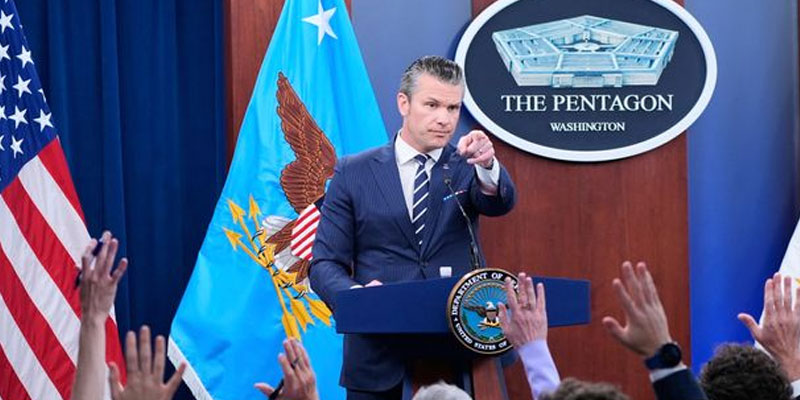
The Trump administration has introduced sweeping new restrictions for journalists covering the U.S. Department of Defense. The policy, announced via a 17-page memo under Defense Secretary Pete Hegseth, requires credentialed reporters to sign a pledge agreeing not to report or publish any information—even if unclassified—without formal Pentagon approval.
Journalists who refuse the pledge risk losing their credentials. Movement inside the Pentagon is now tightly controlled; unescorted roaming in many sections, previously open, is no longer permitted.
Defense officials say these changes are necessary for national security, to protect both personnel and sensitive operations. They assert that leaks of both classified and unclassified information, as well as concerns about misinformation, make tighter controls essential.
Major news organizations including The Washington Post, The New York Times, NPR, and Wall Street Journal have condemned the restrictions. Critics say the rules amount to unconstitutional “prior restraint,” infringe upon journalistic independence, and threaten democratic transparency.
What Media Outlets Are Experiencing:
· Several large media houses have already lost their dedicated office spaces within the Pentagon. Earlier in 2025, outlets like The New York Times, NBC News, NPR, and Politico were asked to vacate their in-Pentagon office spots under a “media rotation program.” These spaces were reallocated to other outlets, many of which are viewed as more conservative.
· Outlets affected have expressed concern that losing physical workspace limits their ability to report in real time and impacts their access to Pentagon sources.
Transparency and Oversight: With tighter controls, covering military decisions, budgeting, or operations might become more difficult for journalists, potentially reducing public oversight of the DoD.
Speed of Reporting: Requiring approval before publishing—even for unclassified material—could significantly delay reporting or block certain stories entirely.
Risk of Credential Revocations: Journalists who don’t comply with the new rules, or whose reporting is deemed unauthorized, may lose access entirely.
Several legal experts and advocacy groups anticipate lawsuits challenging these rules under First Amendment grounds. There’s concern the policy might go farther than U.S. precedent allows for restricting press freedom