
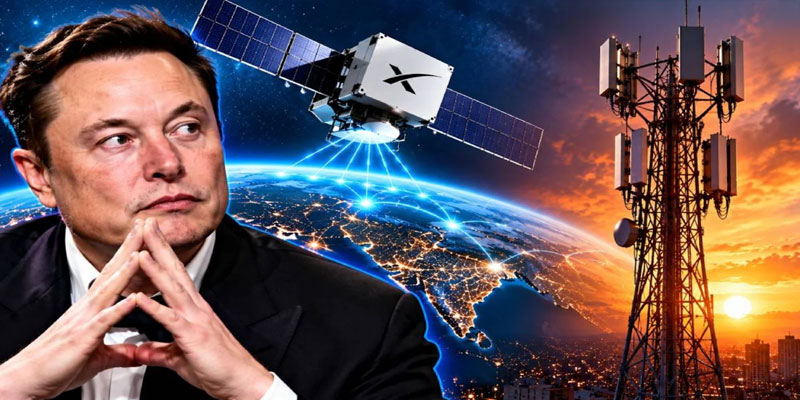
Krugman’s Starlink argument has reignited an important debate over the growing influence of private technology companies in national security and international conflicts. Nobel Prize-winning economist Paul Krugman has argued that control over Elon Musk's Starlink satellite network should no longer rest solely with its billionaire owner. In a Substack article titled “It's Time to Take Starlink Away from Elon Musk,” he contends that a private individual should not possess the power to make decisions that directly affect US national security, military operations and foreign policy. His intervention raises a fundamental question: should strategically critical infrastructure remain under private control when its decisions can influence the outcome of a war?
How Starlink Became a Strategic Military Asset
Starlink, operated by Musk's SpaceX, is a satellite-based internet network designed to provide connectivity across geographical areas where conventional telecommunications infrastructure is unavailable or damaged.
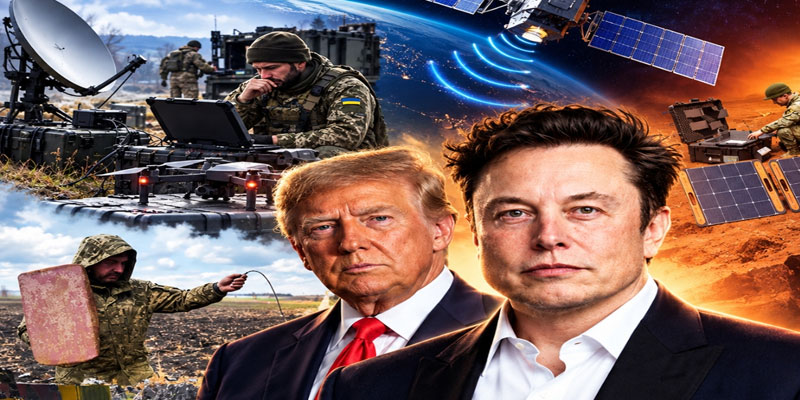
Its importance became particularly evident during the Russia-Ukraine war. Following Russia's invasion, Starlink became a critical communications lifeline for Ukraine, supporting military communications, battlefield coordination and civilian connectivity.
However, reports that Musk ordered restrictions or a slowdown affecting a version of Starlink used by Ukraine triggered Krugman's criticism.
He argued that restricting satellite connectivity during an active conflict could have consequences comparable to a government decision affecting military supplies. According to Krugman, such decisions should not be determined by an individual's political preferences.
Why Krugman Wants Starlink Control Removed
Krugman's central argument is that Starlink has evolved beyond an ordinary commercial internet service into critical defence infrastructure.
His concerns revolve around three major issues:
· Military dependence: Ukrainian forces rely on satellite connectivity for communications and operational coordination.
· Concentration of power: A single private owner can influence the availability of strategically important communications services.
· Democratic accountability: Decisions affecting military operations and foreign policy should remain under elected governments and accountable security institutions.
Krugman argues that restricting Starlink effectively amounted to US intervention in a foreign conflict, benefiting Russia while weakening Ukraine at a critical moment.
He compares Starlink's strategic importance with advanced military equipment supplied by major defence contractors. However, he believes its ownership structure creates an additional problem because operational decisions are concentrated in the hands of one individual.
Does Krugman Want Starlink Nationalised?
Krugman's proposal does not necessarily demand complete government ownership of Starlink. In a subsequent post, he suggested that the network could continue operating under private ownership but through government contracts and public oversight.
The broader idea is that decisions concerning its use in support of US strategic interests must be made by public authorities rather than an individual corporate owner.
Possible policy measures include:
· Stricter government contracts governing military and conflict-zone services.
· Security clearances and regulatory oversight for critical operations.
· Government veto powers over decisions affecting national security.
· A public-private governance framework to ensure accountability without disrupting commercial innovation.
The challenge is to preserve the speed and flexibility of private-sector technology while ensuring that strategic decisions remain accountable.
The Bigger Geopolitical and Security Implications
The controversy extends beyond Musk and Starlink. Commercial technology companies are increasingly becoming essential components of national defence. Private satellite networks, cloud computing platforms, artificial intelligence systems and commercial launch providers can influence military capabilities and geopolitical outcomes.
This creates a new policy dilemma for governments: how can they benefit from private innovation without surrendering control over infrastructure that has become strategically indispensable?
The United States, in particular, must consider whether existing defence procurement and regulatory frameworks are sufficient to address this changing reality.
When Private Power Challenges National Security
Krugman's intervention highlights a growing tension between technological innovation, private ownership and democratic accountability. Starlink has demonstrated the extraordinary contribution commercial technology can make during a military crisis, but its strategic importance also exposes the risks of excessive dependence on a privately controlled network.
Ultimately, the issue is bigger than Elon Musk or his political positions. It concerns who has the authority to determine how critical technology is deployed when national security and international stability are at stake. Governments cannot afford to treat strategically indispensable private infrastructure like an ordinary commercial product. The challenge ahead is to establish clear rules that protect national interests without discouraging private innovation.
(With agency inputs)