
Iran Strikes on CIA Facilities
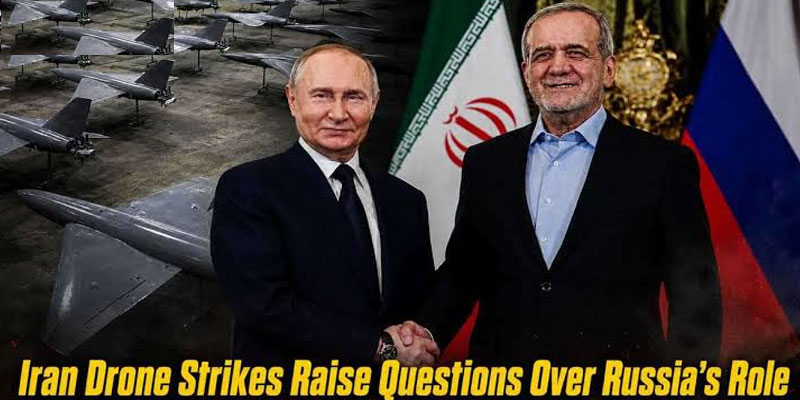
Iran's recent drone strikes on facilities in the Gulf reportedly linked to the US Central Intelligence Agency (CIA) have intensified scrutiny of the growing military partnership between Tehran and Moscow. The precision of the attacks has prompted American intelligence agencies to investigate whether Russia provided operational assistance, technical support or targeting information. While US officials have not reached any definitive conclusions, the incident has renewed concerns about the expanding strategic cooperation between Russia and Iran and its implications for regional and global security.
Precision Strikes Spark Intelligence Questions
In a series of recent attacks, Iranian drones struck facilities in the Gulf that US officials privately acknowledge are associated with CIA operations. The strikes reportedly caused damage and casualties and stood out because of their apparent accuracy against highly sensitive targets.
The effectiveness of the operation has led intelligence analysts to question whether Iran executed the attacks independently or benefited from external assistance, particularly from Russia, which has significantly expanded military cooperation with Tehran over the past few years.
What Is the US Intelligence Community Investigating?
US intelligence agencies have launched an internal assessment to determine whether Russia played any direct role in the attacks. Investigators are examining whether Moscow supplied targeting intelligence, enhanced navigation systems or modified drone technology that may have improved the effectiveness of the strikes.
Analysts are reviewing battlefield evidence, drone telemetry, satellite imagery and intelligence shared by allied nations. While some Western intelligence assessments cited in media reports suggest Russia may have contributed in some capacity, officials emphasise that these remain working hypotheses rather than established findings.
At present, no public evidence conclusively demonstrates direct Russian involvement in planning or executing the attacks.
Russia and Iran's Expanding Military Partnership
Although Moscow's role in these specific strikes remains unproven, the broader military relationship between Russia and Iran is well documented.
Western intelligence agencies believe Russia has assisted in integrating advanced satellite navigation systems, including the Kometa-M guidance system, into Iranian drone platforms, making them more resistant to electronic jamming and significantly more accurate.
Why These Strikes Are Drawing Special Attention
Unlike conventional military installations, facilities associated with intelligence agencies such as the CIA are generally protected by multiple layers of physical security and operational secrecy. Successfully targeting such sites requires greater precision, intelligence gathering and planning.
This has prompted analysts to examine whether Iran's growing strike capability reflects purely indigenous technological progress or whether it has benefited from Russian assistance in areas such as surveillance, target identification, navigation and operational planning.
Some security experts also see the attacks as potentially fitting a broader strategic pattern in which Russia strengthens Iran's military capabilities while avoiding direct confrontation with the United States.
A New Phase in Strategic Cooperation?
If future intelligence establishes that Russia directly assisted Iran in targeting CIA-linked facilities, it would represent a significant escalation in bilateral military cooperation. The relationship would move beyond technology transfers and weapons development into operational coordination against American intelligence infrastructure.
Such a finding would reinforce concerns in Washington that Russia and Iran are evolving into a more integrated strategic partnership, capable of coordinating actions across both the Ukraine conflict and the Middle East.
Even if no direct operational link is ultimately confirmed, the investigation itself reflects growing concern that continued Russian support is steadily improving Iran's ability to conduct increasingly precise, sophisticated and deniable attacks against US military, diplomatic and intelligence assets.
The Investigation May Shape Future Geopolitical Calculations
The strikes on CIA-linked facilities have become more than an isolated security incident—they represent a broader test of the evolving Russia-Iran partnership and its potential impact on global stability. While investigators continue to assess whether Moscow played a direct operational role, the episode underscores how advances in military technology, intelligence sharing and strategic cooperation are reshaping modern conflict. For Washington, the challenge now extends beyond identifying responsibility to preparing for a future in which adversarial partnerships may become increasingly coordinated, technologically advanced and difficult to deter without risking wider regional escalation.
(With agency inputs)