
US Regulator Seeks to Bypass New Delhi in High-Stakes Summons Dispute
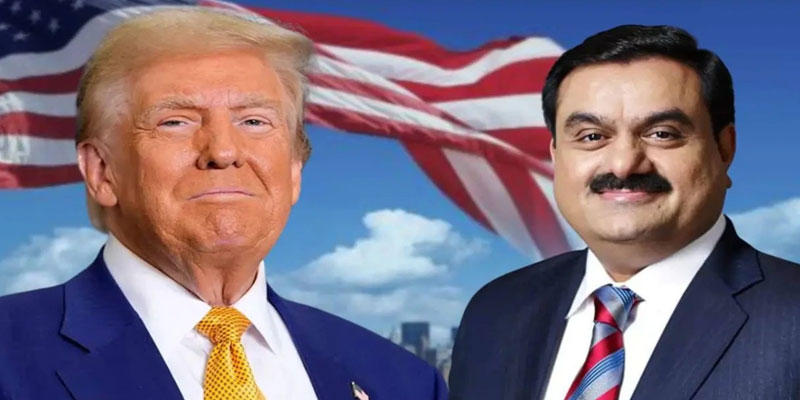
In an unusual escalation, the US Securities and Exchange Commission (SEC) has asked a federal court for permission to directly serve legal summons on Indian billionaire Gautam Adani and his nephew Sagar Adani, bypassing India’s Ministry of Law and Justice. After more than a year of failed attempts through formal diplomatic channels, the American regulator is seeking to notify the Adanis via email and their US-based legal counsel—an approach that raises sensitive questions about sovereignty, cross-border enforcement, and bilateral trust.
The Adani Controversy: A Brief Introduction
The dispute sits atop a broader and long-running controversy surrounding the Adani Group, one of India’s largest conglomerates with interests spanning ports, power, infrastructure, and renewable energy. Scrutiny intensified in January 2023 when US short-seller Hindenburg Research accused the group of market manipulation, accounting irregularities, and misuse of offshore entities. Although the allegations triggered a massive erosion in market value and drew global attention, Indian authorities eventually closed their investigations, and the Supreme Court cleared the group of regulatory wrongdoing in 2024.
The US, however, continued its own probes. These culminated in criminal and civil actions filed in New York in late 2024, placing the Adani leadership at the center of one of the most prominent enforcement cases involving an Indian corporate empire.
Inside the US Case: Alleged Bribery and Investor Deception
At the heart of the US action are allegations that senior Adani executives orchestrated a large-scale bribery scheme between 2020 and 2024 to secure lucrative solar power contracts in India. US prosecutors allege that more than $250 million was promised or paid to Indian officials, yielding contracts that generated billions in projected profits.
The SEC further contends that during a 2021 bond offering to US investors, Adani Green Energy failed to disclose these alleged practices, even while publicly emphasizing strict compliance and anti-corruption safeguards. On this basis, American authorities have charged the defendants with violations ranging from securities fraud to breaches of the Foreign Corrupt Practices Act (FCPA).
Procedural Deadlock with India
Serving the summons has proven contentious. The SEC initially relied on the Hague Convention mechanism, formally routing its requests through India’s legal authorities. Indian courts rejected these attempts, citing technical deficiencies such as missing seals, absent signatures, and questions over whether US regulatory rules applied domestically. From the SEC’s perspective, these objections were overly formalistic and inconsistent with international norms, especially in an era of digital communication.
After months of silence and repeated denials, the SEC now argues that alternative service—allowed under US procedural law—is both lawful and necessary, given that the defendants are represented by prominent American law firms and actively engage with US markets.
Diplomatic Implications for US–India Relations
While unlikely to spark an outright diplomatic crisis, the episode injects friction into an otherwise strategic partnership. For Washington, India’s reluctance to facilitate service risks appearing as protection of a politically connected tycoon, reinforcing narratives of selective enforcement. For New Delhi, the SEC’s attempt to bypass official channels can be seen as an intrusion into domestic jurisdiction and a challenge to judicial sovereignty.
The timing is delicate. The dispute unfolds alongside trade negotiations, tariff disagreements, and expanding defense and Indo-Pacific cooperation. Even subtle legal confrontations can complicate trust, particularly when they intersect with domestic politics and high-profile business interests.
A Legal Battle with Strategic Ripples
The SEC’s bid to serve the Adani summons outside traditional diplomatic pathways underscores the growing strain between globalized enforcement regimes and national legal boundaries. How courts rule on alternative service will shape not only this case but also future cross-border actions involving emerging-market conglomerates. For India and the US, managing the fallout will require balancing legal principles with diplomatic pragmatism—ensuring that a courtroom dispute does not spill over into a broader strategic relationship that both sides have strong incentives to protect.
(With agency inputs)