
Telegram Moves Court Against Government Restriction
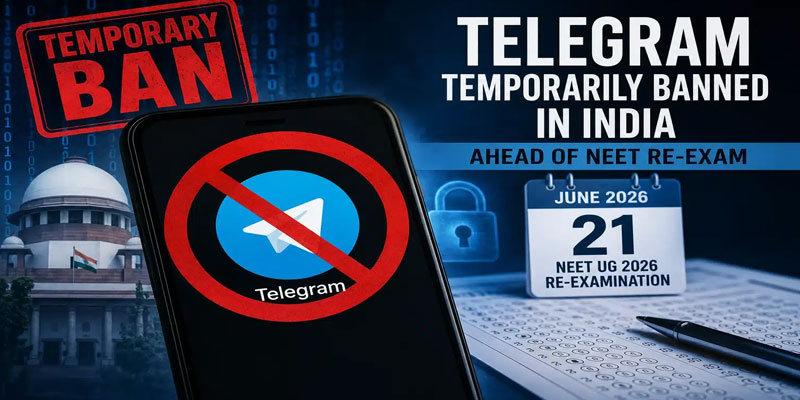
Telegram has approached the Delhi High Court challenging the Indian government's decision to temporarily block access to the messaging platform ahead of the re-examination of the National Eligibility cum Entrance Test (NEET-UG) 2026. The restriction, which is scheduled to remain in force until June 22, was imposed as part of efforts to prevent cheating and the circulation of leaked examination material. The move has triggered a wider debate over the balance between safeguarding examination integrity and protecting the digital rights of millions of users.
NEET-UG Leak Triggered Extraordinary Measures
The controversy has its roots in the NEET-UG 2026 paper leak scandal, one of the biggest examination-related controversies in recent years. Following allegations that question papers had been leaked and circulated before the test, authorities cancelled the examination and announced a nationwide retest for June 21.
The incident affected millions of students and generated widespread public concern about the credibility of India's competitive examination system. Investigators subsequently identified several Telegram channels that were allegedly being used to market purported leaked question papers and examination materials to candidates and their families for varying sums of money.
The developments prompted authorities to consider stronger preventive measures ahead of the retest.
Why the Government Ordered the Ban
Acting on a request from the National Testing Agency (NTA), the Ministry of Electronics and Information Technology (MeitY) directed Telegram to temporarily restrict access in India until the completion of the re-examination process.
In addition to the temporary block, the government reportedly asked the platform to disable its message-editing feature until June 30. Authorities argued that the feature had allegedly been misused to alter messages and create misleading evidence related to examination leaks.
The government also instructed major app-store operators to temporarily remove Telegram from their Indian marketplaces during the restricted period. Officials maintain that the action is a targeted and temporary measure aimed solely at protecting the integrity of the examination process.
Current Scenario: Digital Rights Versus Exam Security
Telegram has strongly opposed the decision and is seeking urgent judicial intervention. The company argues that suspending access to the platform effectively penalises around 150 million Indian users for the actions of a small number of criminal actors.
According to Telegram, the platform serves a wide range of legitimate purposes, including communication, education, business collaboration and information sharing. The company contends that a blanket restriction is disproportionate and sets a concerning precedent for digital governance.
The NTA, however, has defended the move, stating that organised cheating syndicates systematically exploited the platform to mislead candidates and undermine confidence in the examination process. The agency maintains that extraordinary circumstances warranted extraordinary safeguards. The dispute unfolds amid broader regulatory scrutiny of Telegram over allegations concerning misuse of the platform for other unlawful activities, adding another dimension to the debate.
A Test Case for Regulation in the Digital Age
The Telegram case highlights the growing challenge governments face in balancing public interest with digital freedoms. While protecting the integrity of high-stakes examinations is a legitimate objective, the use of platform-wide restrictions raises important questions about proportionality, accountability and user rights. The Delhi High Court's response could have implications far beyond the NEET examination, potentially shaping future debates on how governments regulate digital platforms during periods of heightened security and public concern.
(With agency inputs)