India’s GSAT-7C Satellite to Transform Air Force Communications
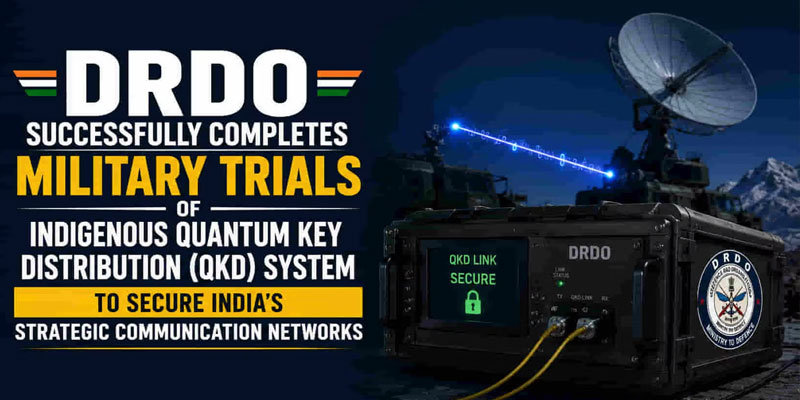
India has signed a ₹2,563-crore contract to develop GSAT-7C, the Indian Air Force’s (IAF) first dedicated military communications satellite. The project is expected to strengthen secure connectivity between fighter aircraft, drones, radars and ground command centres, enabling forces to exchange critical information beyond the reach of conventional radio links. The initiative marks a significant step towards building an indigenous, space-based communications network for India’s air combat capabilities.
Strengthening India’s Military Space Programme
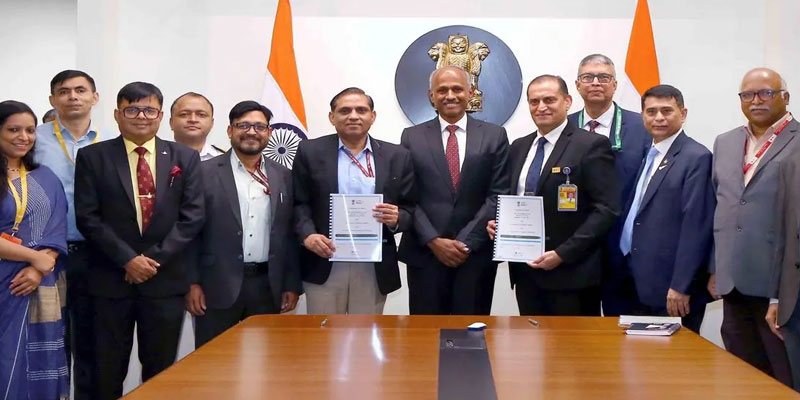
On October 15, 2026, the Ministry of Defence signed the contract with NewSpace India Limited (NSIL), the commercial arm of the Indian Space Research Organisation (ISRO). The agreement forms part of a larger ₹4,106-crore defence package, which also includes ₹1,543 crore for Varunastra heavyweight torpedoes for the Indian Navy.
Until now, the IAF has largely depended on shared satellite transponder capacity for its communications requirements. GSAT-7C is intended to provide a dedicated system, designed, developed and manufactured indigenously, reducing dependence on external capabilities.
The project builds on India's military satellite programme:
· GSAT-7: Launched in 2013, primarily supporting the Indian Navy.
· GSAT-7A: Launched in 2018, providing communications support to the IAF.
· GSAT-7C: Planned as the first satellite dedicated exclusively to the Air Force.
How GSAT-7C Will Transform Air Operations
The satellite is intended to establish a secure communications network connecting space-based infrastructure, ground hubs and software-defined radios (SDRs). Its key capability will be beyond-line-of-sight communication, allowing military platforms to remain connected when distance, terrain or electronic interference limits conventional radio transmissions.
The expected operational benefits include:
· Real-time information sharing: Fighter aircraft, airborne early-warning platforms, unmanned aerial vehicles (UAVs), radars and ground stations will be able to exchange critical operational data and video.
· Enhanced security: Dedicated communications channels and advanced encryption are expected to reduce the risk of interception and unauthorised access.
· Extended operational reach: Aircraft and ground units will be able to communicate over greater distances without relying exclusively on conventional radio links.
· Improved coordination: Faster information exchange can support target identification, mission planning and command decisions during complex operations.
The satellite is expected to become operational by 2030, although an official launch date has not been announced.
Strategic Advantage in Modern Warfare
Modern air warfare increasingly depends on network-centric operations, where the speed and reliability of information can influence mission outcomes. GSAT-7C could help the IAF coordinate airborne and ground assets more effectively, particularly during high-intensity operations and electronic-warfare scenarios.
Securing India’s Skies Through Indigenous Space Power
GSAT-7C represents more than a communications upgrade; it signals India's ambition to secure critical military infrastructure through domestic technological capabilities. Its eventual effectiveness will depend on timely delivery, system integration, cybersecurity and resistance to jamming. If successfully implemented, the satellite could give the IAF a sovereign communications backbone, strengthening operational preparedness while advancing India's pursuit of defence self-reliance.