
Trump’s China Visit Opens with Warm Diplomatic Messaging
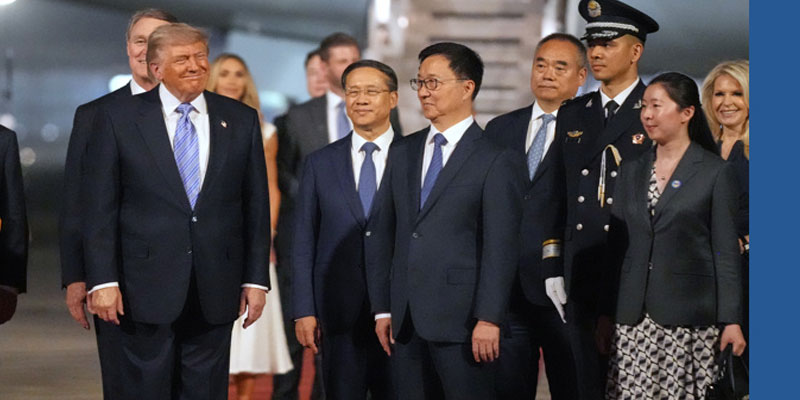
US President Donald Trump and Chinese President Xi Jinping projected unusual warmth and optimism during high-level meetings in Beijing, with Xi declaring that China’s “Great Rejuvenation” and America’s “MAGA” vision could “go hand in hand.” The remarks came during Trump’s closely watched China visit, which focused on stabilizing economic ties, managing geopolitical tensions, and restoring communication between the world’s two largest powers.
Trump described the talks as “extremely positive and productive” and publicly praised the reception arranged by Beijing, calling it “magnificent — like none other.” The carefully choreographed diplomatic optics, including ceremonial events and private meetings, were intended to showcase a renewed willingness on both sides to manage rivalry through dialogue rather than confrontation.
For China, Xi’s language signaled an effort to portray cooperation with the United States as compatible with Beijing’s long-term national ambitions. For Trump, the emphasis remained firmly on economic outcomes, trade stability, and high-profile dealmaking.
Symbolism and Personal Diplomacy Shape the Summit
The summit heavily emphasized leader-level rapport and symbolic messaging. Xi’s framing of China’s rise alongside Trump’s “Make America Great Again” narrative reflected a deliberate rhetorical strategy aimed at reducing perceptions of inevitable conflict between the two nations.
By presenting the relationship as potentially mutually beneficial rather than zero-sum, Beijing sought to reassure domestic audiences, global investors, and international partners that China remains committed to stable engagement with Washington despite ongoing strategic competition.
Trump, meanwhile, used praise and personal diplomacy to create a favorable atmosphere for negotiations. His public appreciation of Xi and focus on productive talks aligned with his transactional diplomatic style, which prioritizes visible economic gains and market confidence over ideological confrontation.
Trade, Technology and Economic Stability Dominate Talks
Economic issues formed the core of the discussions. Both sides reportedly explored ways to preserve the fragile October trade truce while expanding bilateral economic cooperation. Discussions included possible increases in Chinese purchases of American agricultural products and aircraft, along with proposals for stronger trade-management mechanisms to prevent future tariff escalation.
The summit also featured a major American business delegation, highlighting the growing importance of technology and industrial competition in US-China relations. Talks reportedly touched on artificial intelligence, semiconductors, critical supply chains, and commercial opportunities involving major corporations.
However, analysts believe the likely outcomes will remain limited to incremental agreements rather than sweeping structural changes. Deep disputes over technology restrictions, industrial policy, and export controls remain unresolved and are expected to continue through technical negotiations and working groups.
Security Concerns Continue Beneath Diplomatic Warmth
Despite the positive tone, sensitive geopolitical issues remained central to the discussions. Iran and broader Middle East tensions reportedly featured prominently, with both sides discussing ways to reduce escalation risks amid growing regional instability.
Taiwan also remained a difficult subject. While neither side signaled major policy changes publicly, the summit provided an opportunity for informal exchanges aimed at lowering tensions surrounding arms sales and cross-Strait security concerns.
The contrast between cordial rhetoric and unresolved strategic disagreements illustrates the complex nature of current US-China relations: cooperation in some areas continues alongside deep rivalry in others.
Constructive Optics Without Strategic Resolution
The Beijing summit succeeded in restoring a more constructive tone to US-China relations and demonstrated the continued importance of direct leader-level engagement. Positive optics, modest trade understandings, and renewed communication channels may help stabilize markets and reduce immediate diplomatic tensions. Yet beneath the carefully managed symbolism remain unresolved disputes over technology, security, and global influence. The true significance of the summit will depend not on public praise alone, but on whether both sides can translate personal rapport into durable institutional mechanisms capable of managing long-term strategic competition responsibly.
(With agency inputs)