
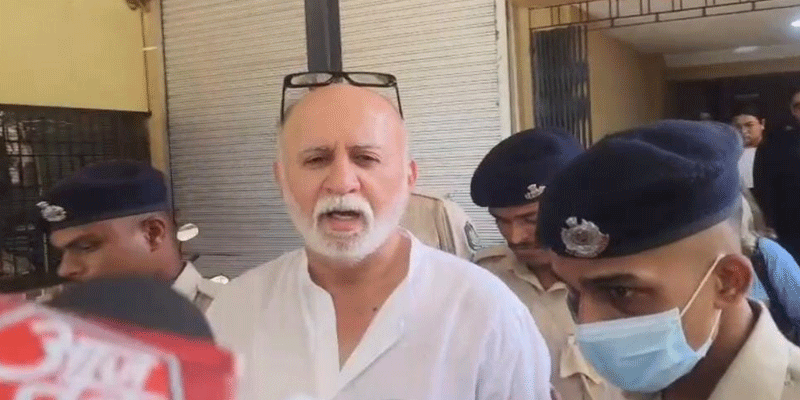
Tejpal surrenders after legal reversal, complying with the Supreme Court’s direction following the Bombay High Court’s decision to overturn his acquittal and convict him in the 2013 Goa rape case. The development brings the nearly 13-year-old case into another crucial phase, with Tejpal now preparing to challenge the conviction before the Supreme Court.
A Case That Has Spanned Nearly 13 Years
Former Tehelka editor-in-chief Tarun Tejpal surrendered before the Mapusa court in Goa on Monday. The 62-year-old journalist faces a 10-year rigorous-imprisonment sentence imposed by the Bombay High Court after it reversed his acquittal by the trial court.
The case began in November 2013, when a junior woman journalist accused Tejpal of sexually assaulting her inside a hotel elevator at the Grand Hyatt in Goa during Tehelka’s THiNK festival. The allegations triggered his arrest and a nationwide debate over workplace sexual harassment, institutional accountability and power within the media industry. Tejpal denied the allegations and maintained his innocence.
From Acquittal to Conviction
In May 2021, the Mapusa sessions court acquitted Tejpal in a 527-page judgment, giving him the benefit of doubt and finding that the prosecution had not established the charges beyond reasonable doubt.
The Goa government challenged that decision. On August 6, 2026, the Goa Bench of the Bombay High Court allowed the appeal, overturned the acquittal and convicted Tejpal under relevant provisions of the Indian Penal Code concerning aggravated rape, sexual harassment, assault with intent to disrobe and wrongful confinement.
The High Court awarded 10 years’ rigorous imprisonment for the principal offences, with other sentences running concurrently, along with fines. It rejected the state’s plea for life imprisonment and imposed the minimum sentence for the principal offences, citing the passage of time and absence of reported subsequent criminal misconduct.
Why Surrender Became Necessary
Tejpal approached the Supreme Court challenging both his conviction and sentence and sought exemption from surrender while his appeal remained pending. His lawyers cited his age, previous custody and the fact that he had remained on bail during much of the proceedings.
The Goa government opposed the request. On August 25, the Supreme Court rejected his exemption plea and directed him to surrender and submit a surrender certificate before his criminal appeal could proceed on merits.
What Happens Next
The surrender does not conclude the case. It fulfils the Supreme Court’s procedural requirement and clears the way for substantive consideration of Tejpal’s appeal, expected to come up on September 22, subject to the required certificate.
Meanwhile, the Goa government has separately sought enhancement of the sentence to life imprisonment. Thus, two questions remain before the Supreme Court: whether the High Court’s conviction withstands appellate scrutiny and whether the punishment should be increased.
The Final Legal Test Lies Ahead
The case remains significant for its implications for workplace accountability, sexual violence and the responsibilities of those holding positions of authority. The sharply different conclusions reached by the trial court and High Court also highlight the complexities of evaluating testimony and evidence in criminal appeals.
Tejpal’s surrender enforces the High Court judgment, but it does not make that judgment final. The Supreme Court will now provide the decisive legal test—on both the conviction and, potentially, the sentence.
(With agency inputs)