
A Breakthrough in Soldier Health Monitoring
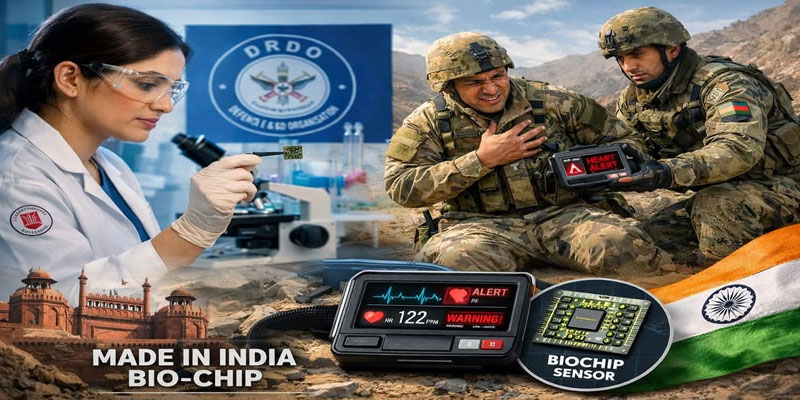
Delhi University’s Miranda House College, in collaboration with the Defence Research and Development Organisation (DRDO), has unveiled BioFET, a pioneering biological chip prototype designed to detect early heart attack risks among soldiers deployed in extreme conditions. Led by Professor Monika Tomar, the portable sensor examines blood serum for three key cardiac biomarkers, enabling timely intervention and potentially saving lives in high-altitude or sub-zero deployments. The development underscores India’s push for self-reliant, indigenous medical technology.
Addressing Cardiac Risk in the Armed Forces
Cardiovascular incidents among soldiers, particularly those operating at high altitudes or under severe climatic stress, have been a growing concern. Factors such as cold-induced blood thickening and altitude stress increase clot formation, often striking even physically fit personnel without warning. BioFET’s point-of-care design allows rapid, field-ready detection of abnormal biomarker levels, facilitating immediate evacuation or treatment. The innovation not only enhances battlefield medical preparedness but also aligns with India’s broader Atmanirbhar initiative in strategic biotechnology.
BioFET Technology and Development Journey
BioFET (Bio Field-Effect Transistor) functions similarly to a glucometer, requiring only a small blood sample for multi-biomarker analysis. It flags abnormal levels in real time, alerting medical personnel or soldiers themselves to potential cardiac events. The project took five years, with initial research at Miranda House’s Smart Materials & Devices Lab, followed by two years of close collaboration with DRDO. Challenges included adapting lab-scale sensors into rugged, portable devices suitable for field conditions. The in-house fabrication reduces reliance on imports by 50–60%, offering a cost-effective alternative to foreign biosensors.
Strategically, the chip offers the Indian Army real-time cardiac monitoring without reliance on full laboratories, allowing rapid interventions and potential deployment of wearable networks to detect heart attacks, seizures, and other critical events. Successful trials could see army-wide adoption and even exports to militaries operating in extreme environments.
Potential Civilian Applications
Beyond its military utility, BioFET has significant civilian healthcare potential. Point-of-care diagnostics could revolutionize early detection of cardiac events in India, where heart disease claims approximately 1.8 million lives annually. Rural primary health centers and community health workers could employ the device to screen high-risk populations, including diabetics and hypertensive patients, enabling pre-emptive hospital interventions.
The chip’s portability and affordability also make it ideal for home monitoring among post-heart attack patients and the elderly. Integration with wearables or mobile apps could provide continuous alerts, akin to ECG-enabled smartwatches but at a fraction of the cost. BioFET could be deployed in disaster zones, pilgrimages, and remote areas, democratizing access to advanced diagnostics while reducing urban healthcare pressure.
Analytical Outlook and Market Prospects
BioFET positions India as a leader in multi-biomarker, low-cost biosensors. Future expansions may include chronic disease management, cancer marker detection, sepsis monitoring, and diabetes variants. Challenges remain: ensuring ambient stability for accurate readings, regulatory approval from CDSCO, and scaling production through industrial partners. With India’s point-of-care diagnostics market projected at $2 billion and global FET biosensor growth at 15% annually, the technology promises both domestic impact and export potential.
A Dual-Use Innovation for Health and Sovereignty
The Miranda House–DRDO collaboration demonstrates the synergy between civilian research and defense applications, producing a cost-efficient, indigenous solution to a critical health challenge. BioFET has the potential to transform battlefield medicine while simultaneously empowering civilian cardiac care, particularly in underserved regions. By bridging military and public health needs, the innovation exemplifies India’s capacity for strategic self-reliance in medical technology, heralding a new era of precision, preventive healthcare.
(With agency inputs)