
IMF Projections Signal a Historic Economic Shift
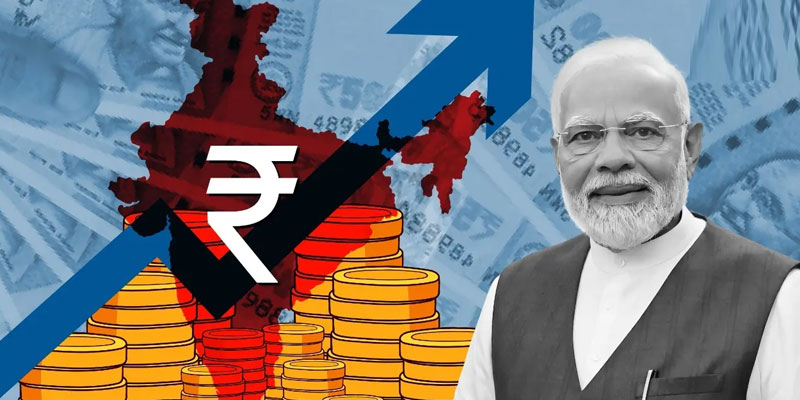
The International Monetary Fund’s latest projections point to a defining milestone in the global economic order: India overtook Japan as the world's fourth-largest economy in 2025 to become the world’s fourth-largest economy and, if current trends persist, overtake Germany within the next three years. This anticipated reshuffling of rankings reflects not a sudden surge, but the cumulative impact of sustained growth, structural reforms, and demographic momentum that have steadily altered India’s economic trajectory over the past decade.
A Decade in the Making
India’s rise in the global economic hierarchy is often described as meteoric, but it is better understood as the outcome of deliberate policy choices and long-term investments. Since the mid-2010s, the country has pursued wide-ranging reforms aimed at unifying markets, attracting capital, and modernizing infrastructure. As advanced economies struggle with aging populations and low growth, India’s scale and speed have begun to translate into headline-changing numbers.
Crossing Japan: Growth Rates Tell the Story
According to IMF estimates, India’s nominal GDP is projected to reach about USD 4.19 trillion in 2025, narrowly surpassing Japan’s USD 4.18 trillion. The ranking shift is driven primarily by a stark growth differential. India has maintained an average annual growth rate of around 6.5–7 percent, even amid global slowdowns, while Japan’s economy has expanded at less than 1 percent.
Domestic demand has been central to this divergence. Consumption accounts for roughly 60 percent of India’s GDP, supported by rising incomes and expanding formal employment. Investment, at about one-third of GDP, has also accelerated, adding nearly USD 1 trillion to economic output since 2020. By contrast, Japan’s aging population—nearly a third over the age of 65—and a depreciating yen have constrained both demand and productivity growth.
Demographics and Scale as Structural Advantages
India’s demographic profile provides a powerful tailwind. With a working-age population of nearly 900 million and a median age of around 28, the country continues to add to its labor force even as other major economies shrink. Urbanization and formalization have amplified this advantage: tens of millions of workers have moved into organized employment, improving productivity and tax compliance.
Japan faces the opposite challenge. Its workforce is contracting by roughly half a million people each year, placing structural limits on output regardless of technological sophistication.
Policy Reforms and Digital Leapfrogging
Reform has been the critical multiplier. The introduction of a nationwide goods and services tax reduced logistical inefficiencies and integrated fragmented markets. Insolvency reforms improved capital recycling, while liberalized foreign investment rules attracted hundreds of billions of dollars in inflows. Manufacturing incentives under production-linked schemes have revived industrial growth, complementing a services sector that already accounts for more than half of GDP.
Equally transformative has been India’s digital public infrastructure. Platforms for digital identity, payments, and direct benefit transfers have lowered transaction costs, reduced leakages, and expanded financial inclusion—fueling consumption and small enterprise growth at scale.
Looking Ahead: Germany in Sight, Challenges Intact
With sustained growth of 7–8 percent, India is on course to rival Germany’s economy by 2027–28, especially as Europe’s largest economy grapples with stagnation and trade headwinds. Yet the achievement comes with caveats. Per capita income remains a fraction of advanced-economy levels, inequality persists, and job creation must keep pace with growth.
Momentum with Responsibility
India overtaking Japan is a landmark moment, symbolizing the shift of economic gravity toward emerging markets. However, the true measure of success will lie not just in rankings, but in translating scale and growth into broad-based prosperity. If reforms deepen and inclusion widens, India’s ascent toward Germany—and beyond—could mark not just a numerical triumph, but a durable transformation.
(With agency inputs)