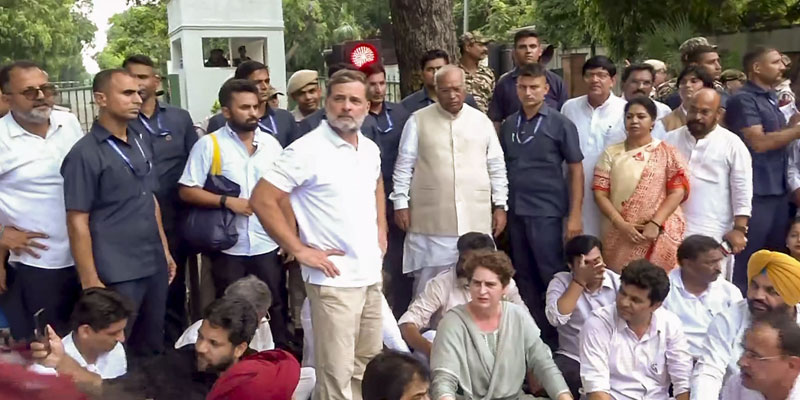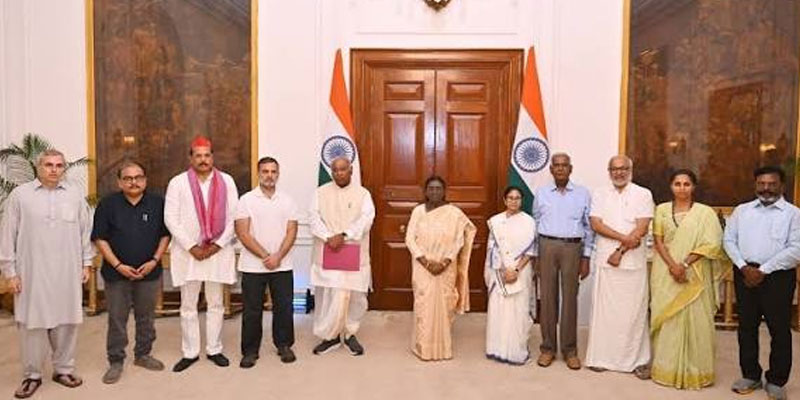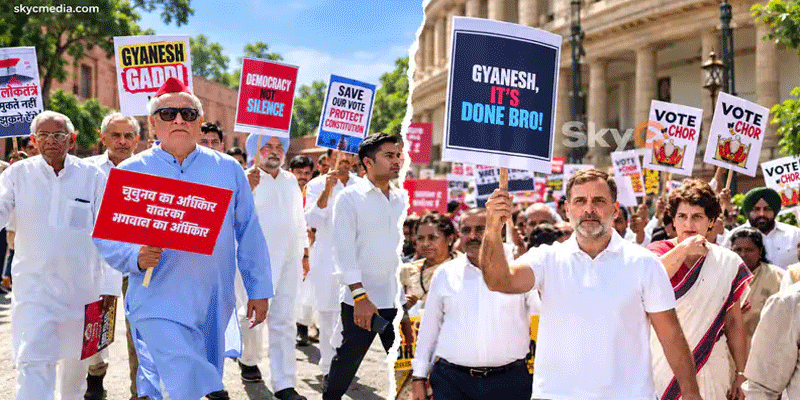


A total of 23 political parties gathered in Delhi on Monday for a crucial INDIA bloc meeting aimed at reworking the opposition’s strategy against the Bharatiya Janata Party (BJP). The meeting, the alliance’s first major formal huddle after recent assembly election setbacks, comes at a time when several opposition parties are facing electoral defeats, internal disagreements and growing uncertainty over the bloc’s future direction. While leaders projected unity against the BJP, the absences of key allies also exposed widening cracks within the coalition.
Opposition Alliance Faces Post-Election Pressure
The INDIA bloc was initially formed as a broad anti-BJP platform bringing together more than three dozen parties from across the country. However, the alliance has struggled to maintain cohesion following recent electoral setbacks suffered by major regional players such as the Trinamool Congress (TMC) and the Dravida Munnetra Kazhagam (DMK).
The latest meeting saw participation shrink to 23 parties, significantly lower than earlier gatherings that included around 36 to 37 members. Political observers view the declining attendance as a sign of weakening coordination and unresolved tensions among alliance partners.
DMK skipped the meeting, reportedly accusing the Congress of political “betrayal,” while Arvind Kejriwal’s Aam Aadmi Party (AAP) also stayed away, further highlighting strains within the opposition camp. Uddhav Thackeray’s Shiv Sena (UBT) joined virtually, underlining both logistical and political complexities within the alliance.
BJP Targets Opposition Over Internal Divisions
Ahead of the meeting, BJP leaders launched sharp attacks on the INDIA bloc, portraying it as an unstable coalition lacking ideological coherence. BJP spokesperson Shehzad Poonawalla described the alliance as a “paper alliance” with “no mission, no vision, only confusion.”
Bihar BJP president Sanjay Saraogi also accused opposition parties of being consumed by “infighting and confusion,” reinforcing the BJP’s narrative that the bloc is incapable of presenting a united political alternative.
The BJP’s criticism reflects its broader strategy of projecting the opposition alliance as fragmented and opportunistic rather than policy-driven.
Opposition Sharpens Criticism of the Centre
Despite internal disagreements, opposition leaders attempted to present a common front on several national issues. Congress president Mallikarjun Kharge accused the Narendra Modi government of weakening India’s traditional foreign policy principles and compromising national interests.
Congress general secretary Jairam Ramesh alleged that democratic institutions and constitutional values were under attack, accusing the Centre of undermining voting rights and centralizing power.
The meeting also focused on issues such as rising prices, the NEET examination controversy and concerns over CBSE-related policies — subjects the opposition hopes could resonate politically ahead of future elections.
Experts See Both Opportunity and Risk
Political analysts believe the INDIA bloc still retains the potential to challenge the BJP if regional parties can coordinate effectively. However, experts also note that the alliance faces serious structural challenges due to competing regional ambitions, leadership disputes and ideological differences.
The absence of major allies from an important strategy meeting has raised fresh doubts over whether the bloc can sustain long-term electoral cooperation.
At the same time, analysts argue that anti-incumbency sentiment and economic concerns could still provide common ground for opposition parties to regroup.
Opposition Unity Faces Its Toughest Political Test
The INDIA bloc meeting reflects both the urgency and fragility of opposition politics in India ahead of future electoral battles. While the gathering demonstrated a continued effort to build a collective challenge against the BJP, shrinking participation and visible internal tensions reveal the alliance’s deeper vulnerabilities. The coming months will determine whether the opposition can overcome personal rivalries and strategic disagreements to emerge as a cohesive political force or remain divided in the face of the BJP’s dominance.
(With agency inputs)