
India's New Military Chief at a Crucial Juncture
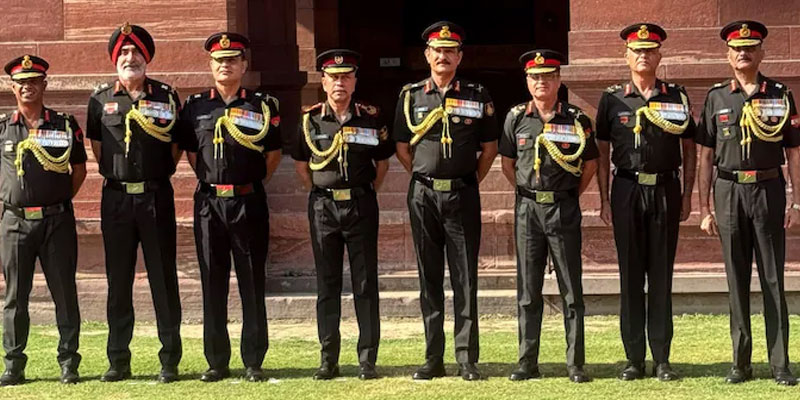
General N.S. Raja Subramani assumed office as India's third Chief of Defence Staff (CDS) on May 31, 2026, succeeding General Anil Chauhan after his distinguished four-decade military career. The appointment comes at a pivotal moment for India's national security architecture, with the country confronting evolving threats along its borders and pursuing ambitious military reforms. As the nation's highest-ranking uniformed officer and principal military adviser to the government, Subramani now shoulders the responsibility of steering the armed forces through one of the most consequential phases in India's defence transformation.
A Distinguished Military and Strategic Journey
A graduate of the National Defence Academy and the Indian Military Academy, General Subramani was commissioned into the 8th Battalion of the Garhwal Rifles in December 1985. Over nearly four decades of service, he held several key operational and leadership appointments, including Vice Chief of the Army Staff and General Officer Commanding-in-Chief of the Central Command.
Most recently, he served as Military Adviser at the National Security Council Secretariat under National Security Advisor Ajit Doval, a role that deepened his involvement in strategic policymaking. His academic credentials—including a Master's degree from King's College London and an MPhil in Defence Studies from Madras University—have earned him recognition as a leading expert on China's and Pakistan's military and strategic affairs. This blend of operational experience and policy expertise makes him uniquely suited for the CDS role.
The Strategic Landscape He Inherits
General Subramani takes charge amid a rapidly changing security environment. India continues to face the prospect of a two-front challenge involving both China and Pakistan, requiring constant military preparedness and strategic coordination.
At the same time, the armed forces are navigating the complexities of modern warfare, where conflicts increasingly span land, sea, air, cyber, and space domains. The need for faster decision-making, integrated operations, and technological superiority has become more urgent than ever.
A major unfinished task awaiting the new CDS is military theaterisation—India's most ambitious defence reform aimed at integrating the Army, Navy, and Air Force under unified theatre commands. While significant groundwork was laid during General Chauhan's tenure, implementation remains incomplete. Lessons emerging from recent operational experiences, including Operation Sindoor, highlighted gaps in joint planning, resource allocation, and air defence coordination that must now be addressed.
Expectations from the New CDS
General Subramani has outlined a clear vision centered on four priorities: accelerating military theaterisation, strengthening tri-service synergy, promoting indigenous defence capabilities, and advancing innovation-driven modernization.
His focus on integrated theatre commands seeks to improve operational efficiency across India's northern borders, western front, and maritime domain. Equally important is his emphasis on multi-domain warfare, where actions in one operational sphere increasingly influence outcomes in others.
As Secretary of the Department of Military Affairs, he is also expected to play a critical role in defence procurement reforms, veterans' welfare, and the expansion of indigenous military manufacturing under the government's Aatmanirbhar Bharat initiative.
A Defining Test for Defence Reforms
General Raja Subramani assumes command at a time when India's security challenges are becoming more complex and interconnected. While his predecessor laid the foundation for greater jointness and modernization, the success of military theaterisation and deeper integration among the services will largely define his tenure. If implemented effectively, these reforms could significantly enhance India's military readiness, strengthen deterrence against simultaneous threats, and shape the future of India's defence capabilities for decades to come.
(With agency inputs)