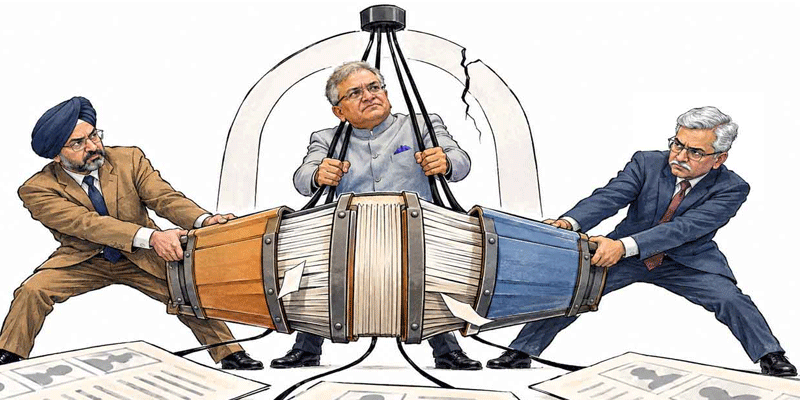

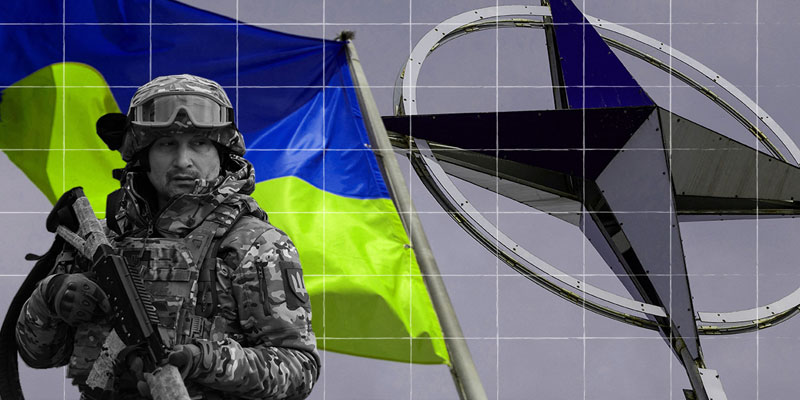
Europe is confronting its most severe security crisis since the end of the Second World War, driven by four fundamental structural shifts that are reshaping the global and regional order, according to The Future of the Euro-Atlantic Security Architecture by Ed Arnold and Darya Dolzikova.
The report argues that the post-war Euro-Atlantic Security Architecture (EASA)—a complex web of institutions, treaties, norms, and alliances—is no longer fit for purpose. Russian aggression, China’s expanding nuclear capabilities, growing unpredictability in U.S. leadership, and rising political instability across Europe have collectively eroded the assumptions that underpinned European security for decades.
The authors stress that in the near term, credible conventional and nuclear deterrence must be the overriding priority, giving Europe the time and strategic space needed to rearm and rebuild a resilient Euro-Atlantic security framework.
NATO Must Be Strengthened—With or Without the U.S.
The report warns that U.S. leadership in Europe can no longer be taken for granted. While Washington is expected to maintain its nuclear commitments to NATO, a likely reduction in U.S. conventional forces—as America increasingly prioritises the Indo-Pacific—risks undermining the credibility of extended nuclear deterrence in Europe.
A reduced U.S. conventional presence could leave destabilising gaps in Europe’s escalation ladder. As a result, European allies must urgently take greater ownership of NATO’s regional defence plans, close critical capability gaps, and prepare for scenarios in which the U.S. is distracted or engaged elsewhere.
The authors argue that “for Europeans to save NATO and continue to enjoy its protections, it must be strengthened quickly”, with Europe capable of operating effectively even in the absence of strong U.S. leadership.
Russia, Nuclear Risks, and the Collapse of Arms Control
Russia’s full-scale invasion of Ukraine in 2022 is described as a direct and violent attempt to overturn the existing security order. Moscow’s repeated nuclear threats, combined with the collapse of arms control agreements, have sharply increased escalation risks across the continent.
At the same time, advancements in China’s nuclear capabilities are reshaping global strategic stability, further complicating Europe’s deterrence environment.
The report highlights the need for closer integration of UK and French nuclear capabilities with strengthened European conventional forces, arguing that robust conventional deterrence is essential to reinforcing nuclear credibility.
Internal Political Instability Weakens European Unity
Beyond external threats, the report identifies rising populism and political fragmentation within Europe as a critical internal challenge. Domestic pressures—particularly over immigration and sovereignty—are straining multilateral institutions and weakening collective action.
The growth of “spoiler states,” such as Hungary, is undermining decision-making within both NATO and the EU by exploiting unanimity rules. The report also warns that calls within the UK to withdraw from the European Convention on Human Rights could damage the values-based foundations of the Euro-Atlantic order, placing Britain alongside Russia and Belarus outside the Council of Europe.
Key Recommendations
- Strengthen NATO for reduced U.S. leadership: European states must be able to operate NATO effectively even if the U.S. scales back its conventional role.
- Prioritise credible deterrence now: Enhanced conventional and nuclear deterrence is essential to buy time for long-term reform of the security architecture.
- Consolidate minilateral security groupings: Aligning the E3 (UK, France, Germany) with the Weimar Triangle (France, Germany, Poland) could create a powerful European leadership core that bridges NATO and the EU and strengthens deterrence coordination, particularly in the nuclear domain.
- The report concludes that Europe stands at a strategic crossroads. Without urgent action to reinforce deterrence, strengthen NATO, and adapt to a more fragmented geopolitical reality, the foundations of European security risk further erosion—at a time when they are needed most.