
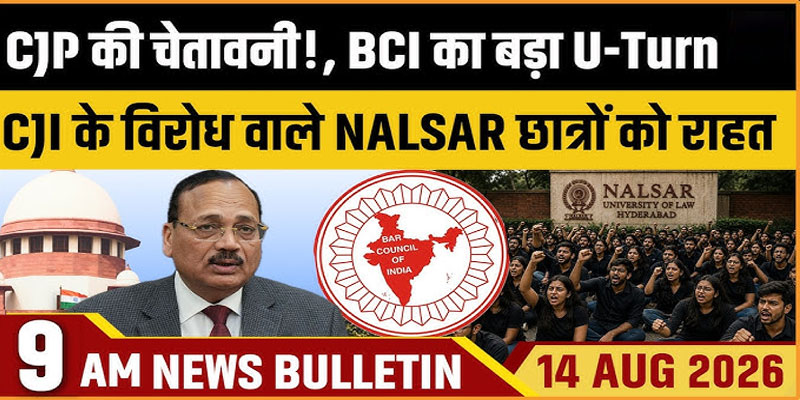
The Bar Council of India (BCI) has dramatically reversed its interim freeze on the advocate enrolment of NALSAR University of Law's entire 2026 graduating batch after Chief Justice of India (CJI) Surya Kant firmly backed students' right to protest. The regulator's U-turn came within hours of the controversial order, following widespread criticism from the legal fraternity and the CJI's clear message that disciplinary action against students for peaceful dissent was unwarranted.
How the Controversy Unfolded
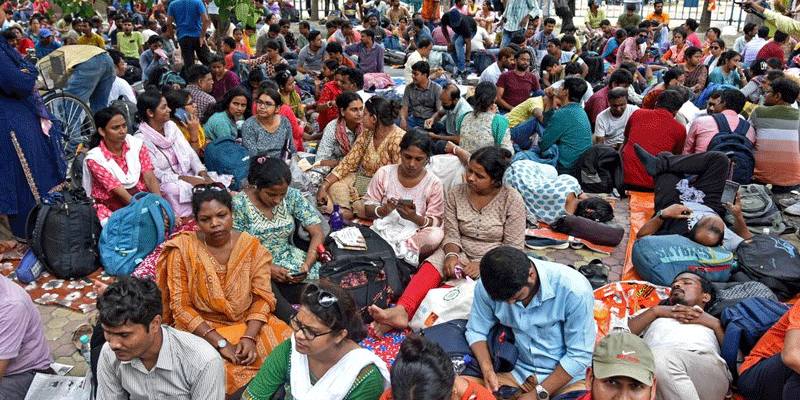
The students argued that certain remarks made by the CJI during a July 2026 hearing on alleged police excesses against NEET-UG protesters at Delhi's Jantar Mantar appeared inconsistent with the constitutional values taught at the institution. While the university retained the invitation, the campaign quickly evolved into a wider debate over freedom of expression, institutional autonomy, and the role of dissent within premier legal institutions.
BCI's Crackdown Sparks Constitutional Debate
The circular described the protesting students as showing insufficient respect for the country's highest judicial office and questioned their suitability to enter the legal profession. It also alleged that faculty members and external influences had fuelled the campaign.
The decision immediately triggered outrage across the legal community. Senior advocates, bar leaders, and constitutional experts condemned the blanket ban as arbitrary and disproportionate, arguing that punishing an entire graduating batch violated principles of individual accountability and due process.
CJI's Intervention Changes the Course
The turning point came when CJI Surya Kant reportedly expressed displeasure at the BCI's intervention, emphasizing that students possess the right to protest and that regulatory bodies should not interfere in such matters through punitive action.
His remarks carried significant institutional weight, signalling that disagreement with judicial figures does not automatically amount to misconduct deserving professional sanctions.
BCI Rolls Back the Ban
Facing mounting public pressure and criticism from within the legal fraternity, the BCI swiftly amended its order.
The revised circular acknowledged that the overwhelming majority of students should not suffer for the alleged actions of a few and restored the right of all 2026 NALSAR graduates to seek enrolment with State Bar Councils.
However, the regulator has still sought an internal inquiry report from the university's Vice-Chancellor regarding allegations that faculty members or external individuals may have orchestrated the boycott campaign. Reports suggest the university is first examining whether such an inquiry is permissible under its governing regulations.
A Defining Moment for Democratic Rights
The NALSAR episode has become more than a campus controversy—it has emerged as a significant test of constitutional freedoms within legal education. By rejecting collective punishment and reaffirming students' right to peaceful protest, the CJI's intervention reinforces that professional regulators must balance institutional dignity with fundamental rights. The episode serves as a reminder that preserving democratic dissent within law schools ultimately strengthens, rather than weakens, the constitutional values future lawyers are expected to uphold.
(With agency inputs)