

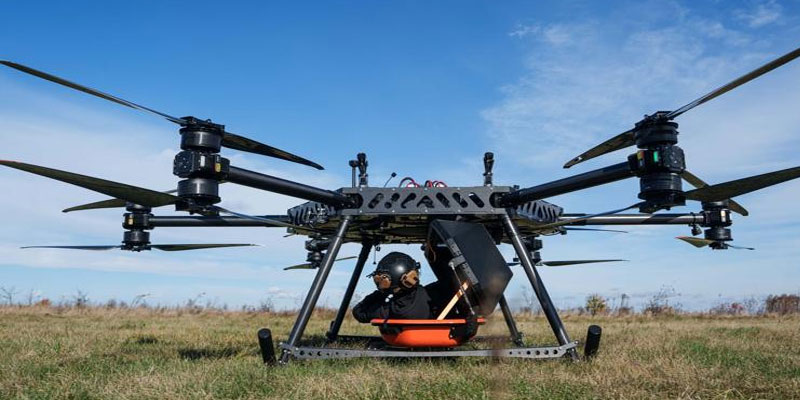
A Wounded Soldier Rescued from a Deadly Frontline
Ukraine’s 92nd Separate Assault Brigade has reported carrying out the first known battlefield evacuation of a wounded soldier using an aerial drone, lifting him from a mine-contested frontline position to safety. Announced on October 19–20, 2026, the operation offers a glimpse of how unmanned technology could transform military medical evacuation in a war increasingly dominated by drones.
The rescue is significant because it addresses one of the most dangerous challenges faced by frontline troops: reaching injured soldiers when conventional vehicles and medical teams cannot safely approach.
The Growing Role of Drones in Combat
Since Russia's full-scale invasion, Ukraine has increasingly deployed unmanned aerial and ground systems for reconnaissance, strikes, logistics and casualty recovery. Persistent surveillance, minefields and attacks by enemy drones have made movement across exposed terrain particularly hazardous.
Ground robots have already been used to retrieve wounded personnel. However, aerial evacuation presents additional engineering challenges, including limited payload capacity, flight stability, the secure positioning of casualties and vulnerability to enemy fire.
The soldier rescued in this operation was identified in reports as 49-year-old Kostiantyn, who had sustained severe leg injuries in the Kupiansk sector of Ukraine's Kharkiv region. According to Ukrainian accounts, landmines and intense Russian drone activity made conventional ground evacuation impractical.
How the Drone Medevac Operation Worked
The brigade reportedly deployed a Heavy Shot Ayudag-6 hexacopter, supplied by Ukrainian manufacturer Gurzuf Defence and modified with a sling-and-winch mechanism.
The evacuation involved several carefully coordinated steps:
· Harness delivery: The drone transported a harness to the injured soldier, who secured himself with guidance from fellow troops.
· Aerial extraction: A winch system lifted him from the dangerous position and carried him across contested territory to a safer location.
· Hospital transfer: Ground medical teams subsequently transported him to Kharkiv Military Hospital, where he was reported to be stable and receiving treatment and rehabilitation.
Verification and the Question of a World First
Although Ukrainian forces have described the operation as unprecedented, the claim has not been independently established as a definitive global first. BBC Verify reportedly confirmed the identity of personnel shown in the footage and found no indications of artificial generation or manipulation.
Ukraine has previously used unmanned ground vehicles to evacuate casualties. The distinction here is the reported use of an aerial drone to lift a wounded soldier directly from the battlefield. Military authorities have withheld the precise date and location for operational security reasons.
From Experimental Rescue to Military Medical Strategy
The operation demonstrates the potential of heavy-lift drones to perform a task traditionally associated with helicopters. In areas where mines, enemy surveillance and air-defence threats make conventional evacuation dangerous, aerial systems could offer an alternative means of extracting casualties.
Ukraine is also exploring purpose-built medical drones, including the StarGate system developed by Skyfall. Such initiatives suggest that casualty evacuation could become an increasingly specialised application of unmanned technology.
However, the approach faces important limitations, including payload capacity, weather conditions, battery endurance, flight stability and the risk of enemy interception. Its effectiveness will depend on whether such systems can operate reliably under combat conditions.
A New Lifeline in Drone-Dominated Warfare
Ukraine’s reported aerial evacuation represents more than a technological demonstration: it points towards a possible change in frontline medical doctrine. If heavy-lift drones can repeatedly rescue wounded personnel from otherwise inaccessible positions, they could reduce evacuation delays and protect additional lives.
The ultimate breakthrough will not be the ability to lift a soldier once, but to make such rescues safe, repeatable and medically effective. As warfare increasingly restricts conventional movement, unmanned evacuation systems could become a vital complement to battlefield medics, ground robots and helicopters.
(With agency inputs)