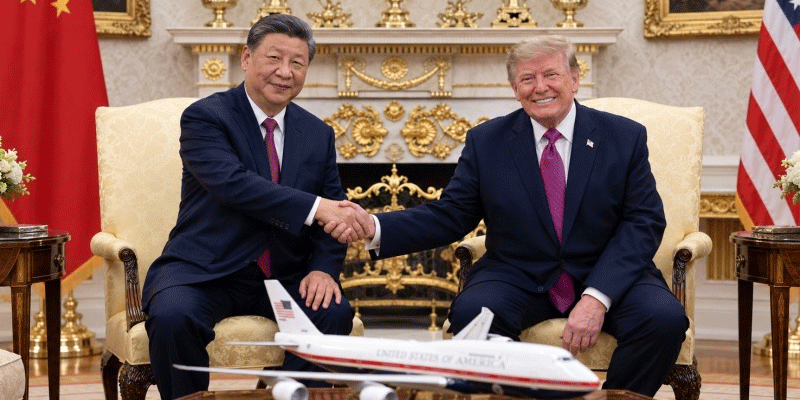

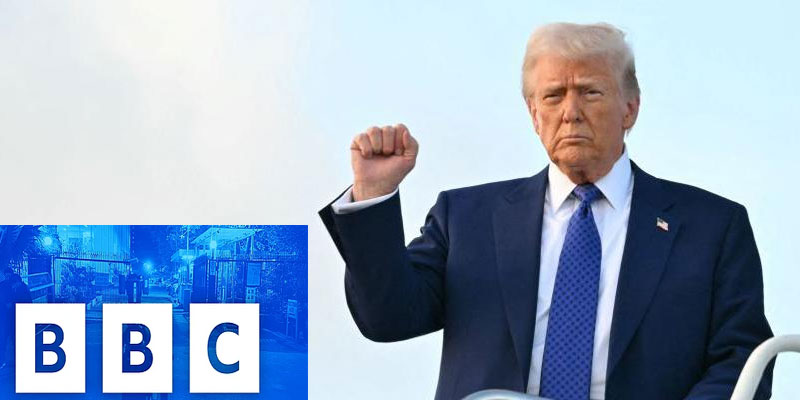
US President Donald Trump has filed a defamation lawsuit seeking nearly ₹40,000 crore in damages against the British Broadcasting Corporation (BBC), alleging that the public broadcaster deliberately misrepresented his remarks in a documentary to portray him as inciting violence. The case has been filed in a federal court in Miami, escalating Trump’s prolonged confrontation with major international media organisations.
According to the lawsuit, the BBC selectively edited and framed Trump’s statements in a manner that distorted their original context. Trump’s legal team claims this created a false and damaging narrative, and that the broadcaster acted with malice and reckless disregard for the truth. The complaint argues that the alleged misrepresentation caused significant harm to Trump’s reputation and political standing, both domestically and internationally.
Trump has long accused mainstream media outlets of bias and politically motivated coverage, frequently asserting that they mischaracterise his words and actions. By taking legal action against the BBC, the dispute extends beyond US media to involve one of the world’s most prominent public broadcasters.
The BBC has not yet issued a detailed public response to the lawsuit but has consistently defended its editorial independence and adherence to high journalistic standards. Legal analysts note that defamation cases involving public figures face a high evidentiary threshold in US courts, requiring proof of actual malice.
If the case proceeds, it could have far-reaching implications for international media reporting and the legal risks associated with political documentaries.