
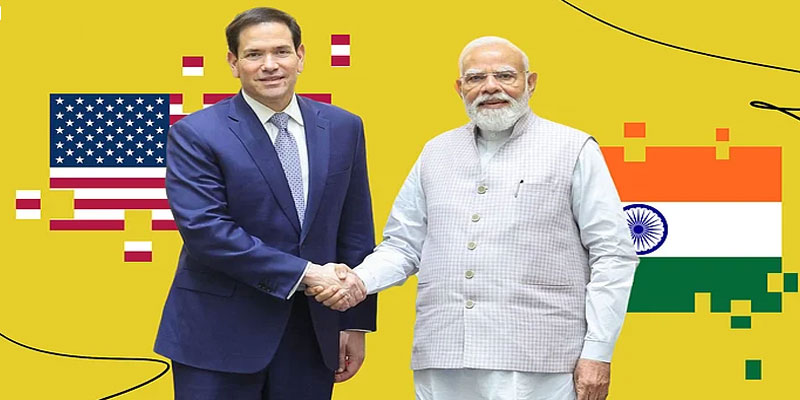
US Secretary of State Marco Rubio's visit to Mumbai and Jamnagar, bypassing New Delhi, has triggered political controversy amid growing geopolitical uncertainty, trade tensions and shifting global energy alliances.
Rubio is scheduled to meet External Affairs Minister S. Jaishankar in Mumbai on October 20, with discussions covering bilateral trade, energy security, defence cooperation, investment and emerging technologies.
The controversy intensified after US Ambassador Sergio Gor indicated that Indian officials were expected to travel to Mumbai. Opposition leaders questioned whether the arrangement undermined India's diplomatic standing.
However, India's Ministry of External Affairs rejected suggestions that Jaishankar had been summoned, emphasising that hosting foreign dignitaries outside New Delhi is an established diplomatic practice.
The visit comes as Washington and New Delhi negotiate a bilateral trade agreement while navigating disagreements over tariffs, Russian crude imports, visa restrictions and strategic economic priorities.
Rubio's planned visit to Reliance Industries' Jamnagar refinery highlights energy diplomacy's growing importance. The facility connects India's refining capabilities with international crude markets and global fuel supply chains.
Washington's recent easing of Russia-related sanctions pressure has improved prospects for trade negotiations, although energy diversification and India's strategic autonomy remain sensitive issues for both governments.
The broader significance extends beyond diplomatic protocol. America's engagement increasingly combines commercial investments, energy security, defence partnerships and technology cooperation with traditional foreign-policy objectives.
For India, the challenge is balancing stronger American economic engagement with independent foreign-policy decisions, diversified energy sourcing and strategic partnerships across competing geopolitical blocs.
Ultimately, Rubio's visit reflects a changing diplomatic landscape where economic interests increasingly shape strategic relationships. India's priority must remain mutually beneficial cooperation, sovereign equality and long-term national interests.