
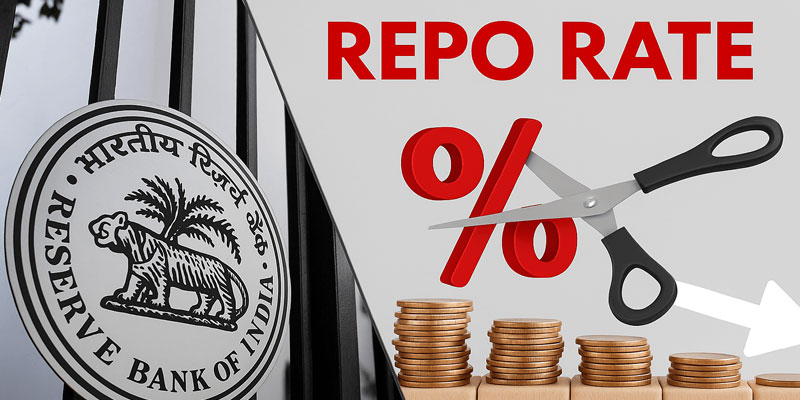
India’s monetary landscape shifted decisively as the Reserve Bank of India delivered another repo rate cut—its fourth this year—bringing the cumulative reduction for 2025 to 125 basis points. The move builds on what the central bank calls a “Goldilocks window” of rapid growth and subdued inflation, even as global headwinds, a weak rupee and tariff pressures complicate the outlook.
The Monetary Policy Committee lowered the repo rate by 25 bps to 5.25%, marking one of the most forceful easing cycles since 2019. Governor Sanjay Malhotra retained a neutral stance but signalled openness to an additional 25-bp trim if macro conditions remain benign—implying a likely landing zone near 5% before a prolonged hold.
To support transmission, the RBI also unveiled a liquidity injection package:
· ₹1 trillion in government bond purchases, and
· A $5-billion dollar–rupee swap,
together capable of releasing roughly $16 billion into the banking system. This is intended to stabilise money-market rates and reassure investors unsettled by rupee volatility and external shocks.
Why RBI Says the Economy Is in a “Goldilocks Phase”
The central bank argues that India is experiencing an unusually favourable mix of high growth and subdued inflation:
· H1 FY26 growth near 8% and Q2 output at 8.2%
· Inflation slipping to multi-year lows, briefly touching 0.25%
· Core inflation indicators showing broad-based softening
· Full-year GDP projected at around 7.3%
This rare combination of robust demand and anchored prices gives policymakers ample room to ease without breaching the inflation mandate.
Balancing Tariffs, a Weak Rupee and Funding Pressures
The rate cut comes at a time when US tariffs of up to 50% on Indian exports are widening the trade deficit. Soft portfolio flows have pushed the rupee towards 89–90 per dollar. Yet the RBI has indicated it will allow the currency to act as an “automatic stabiliser,” stepping in only to smooth speculative swings.
Malhotra underscored India’s buffers:
· $686 billion in forex reserves, covering over 11 months of imports
· Strong services exports and remittances
· Manageable external financing needs
These cushions, the RBI argues, justify continued easing even in a challenging global environment.
What This Means for Policy Direction
With 125 bps of cumulative cuts paired with substantial liquidity support, the RBI is signalling three core priorities:
1. Growth Support: Disinflation appears consistent enough to justify continued accommodation.
2. Exchange-Rate Flexibility: A weaker rupee is acceptable as long as depreciation is orderly.
3. Predictability: After one possible final cut, the RBI is likely to hold steady to preserve the growth–inflation balance.
Which Sectors Gain the Most
Easier monetary conditions typically lift India’s most credit-sensitive sectors:
1. Banks and NBFCs
Lower funding costs and abundant liquidity help banks expand margins and credit flow. NBFCs and housing financiers benefit from cheaper wholesale borrowing and healthier retail loan demand.
2. Housing and Real Estate
Reduced EMIs improve affordability, boosting residential sales—especially in mid-income segments. Developers with leverage gain from lower interest outflow, aiding construction supply chains such as cement and steel.
3. Automobiles and Consumer Durables
Auto and two-wheeler purchases respond quickly to cheaper loans. Durables—ACs, refrigerators, electronics—see stronger demand as EMI schemes become more affordable.
4. Infrastructure and Capital Goods
Lower capital costs encourage fresh project financing in power, renewables, roads and industrial capacity. Softer yields ease debt burdens on large infrastructure firms.
5. MSMEs and Services
Improved availability of working-capital credit aids manufacturing and service clusters, while retail, tourism and hospitality benefit from higher discretionary spending as household EMIs fall.
A Rare Chance to Power Growth
By extending its 2025 easing cycle to 125 bps and injecting significant liquidity, the RBI is leveraging a rare alignment of strong growth and soft inflation to support domestic demand. The biggest winners range from banks and housing to autos, infrastructure and MSMEs. If inflation stays muted and external pressures remain manageable, India’s monetary stance is poised to stay firmly growth-focused while the rupee absorbs global shocks.
(With agency inputs)