

As India marks the first anniversary of the Pahalgam terror attack that killed 26 civilians in Jammu and Kashmir, global leaders, diplomats, and international missions have come together to honour the victims and reiterate their unified stand against terrorism. The commemorations reflect not only remembrance but also a broader message—that the tragedy is part of a global fight against extremist violence.
The Attack That Shook the Valley
On 22 April 2025, the serene meadows of Baisaran Valley near Pahalgam turned into a site of devastation when terrorists opened fire on tourists. The attack claimed 26 lives, including families and visitors from multiple Indian states, making it one of the deadliest civilian-targeted incidents in the region in decades.
The assault was linked to The Resistance Front, believed to have ties with Lashkar-e-Taiba. Analysts noted that targeting tourists was a calculated attempt to disrupt Kashmir’s tourism-driven economy and instil fear beyond the region.
In response, India launched Operation Sindoor on 7 May 2025, carrying out precision strikes on terror infrastructure across the Line of Control. The operation was framed as a measured yet firm response, signalling that those responsible would face consequences.
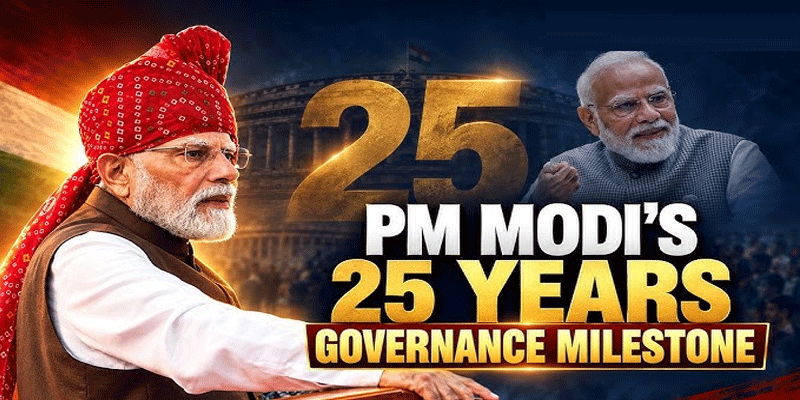
On the anniversary, Narendra Modi reaffirmed that the victims “will never be forgotten” and declared that India would never bow to terrorism. His message tied remembrance with resilience, reinforcing a narrative that combines national grief with determination to act decisively against threats.
This framing positions the attack not as an isolated incident but as part of a continuing struggle, with Operation Sindoor symbolising India’s readiness to respond.
Global Voices of Solidarity
The anniversary saw a broad spectrum of international support:
· The European Union and its 27 member states jointly expressed solidarity with India, condemning terrorism in all forms.
· Israel reaffirmed its partnership with India, with leaders emphasising cooperation in counter-terror efforts.
· Australia and the United Kingdom echoed similar sentiments, stressing shared commitment to peace and security.
· Even geographically distant nations like Argentina paid tribute, underscoring the global resonance of the attack.
· In the United States, political voices reiterated support for India’s counter-terror stance, reflecting bipartisan alignment on the issue.
These messages collectively frame the Pahalgam attack as not just a national tragedy but a shared global concern.
Diplomatic and Strategic Significance
The widespread international response serves multiple purposes. It strengthens India’s position that terrorism in Kashmir has cross-border dimensions and should be viewed within a global security framework. It also reinforces partnerships in intelligence sharing and counter-terror cooperation.
Importantly, the support lends legitimacy to India’s response through Operation Sindoor, presenting it as a calibrated counter-terror action rather than escalation. Domestically, it reassures citizens that India’s position is recognised and supported internationally.
From Tragedy to Global Resolve
One year after the Pahalgam attack, the memory of the victims continues to unite voices across borders. The incident has evolved into a defining moment in India’s counter-terror diplomacy—one that underscores both vulnerability and strength.
As global leaders reaffirm their solidarity, the message is clear: terrorism is a shared challenge, and collective resolve is essential. For India, the legacy of Pahalgam lies not only in remembrance but in shaping a stronger, more coordinated global response to ensure such tragedies are neither forgotten nor repeated.
(With agency inputs)