
India’s retail inflation increased to 4.82% in August 2026, while wholesale prices grew 9.92% year-on-year, highlighting a renewed squeeze on households and businesses. The acceleration was driven largely by higher food and energy costs, with wholesale inflation moving close to the psychologically significant 10% mark.
Inflation Framework Faces a Fresh Test
India follows a flexible inflation-targeting framework under which the Reserve Bank of India (RBI) seeks to keep Consumer Price Index (CPI) inflation at 4%, with a tolerance band of 2% to 6%. The framework gives monetary policy room to accommodate temporary supply shocks while keeping long-term price stability as its central objective.
The latest numbers, however, indicate that inflationary pressures are becoming broader. After a prolonged period of relatively subdued price growth, rising food, fuel and input costs are once again challenging the balance between inflation control and economic growth.
Retail Inflation: Food Costs Drive Household Pressure
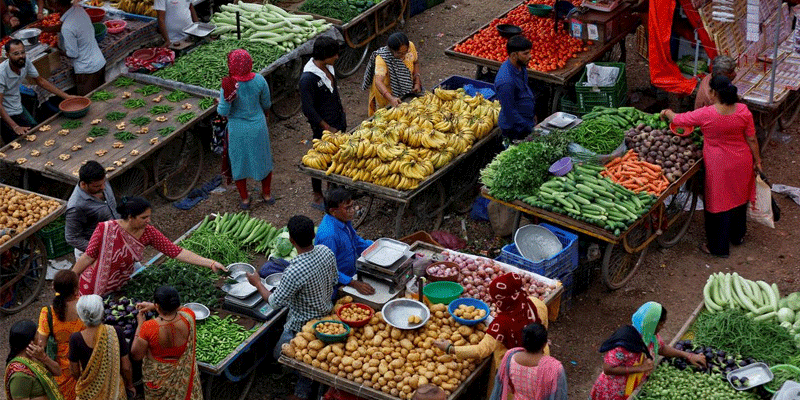
CPI-based retail inflation rose from 4.45% in July to 4.82% in August, marking the highest reading under the new CPI series introduced in January 2026. Food prices remained the principal source of pressure, with food inflation rising to 5.95%, as prices of several essential commodities, including onions, garlic and ginger, increased.
The increase is particularly significant for rural and lower-income households, where food accounts for a larger share of overall consumption. At the same time, core inflation also strengthened to around 4.2%, suggesting that price pressures are extending beyond food and fuel into categories such as clothing, household goods and education.
Wholesale Inflation Signals Deeper Cost Pressures
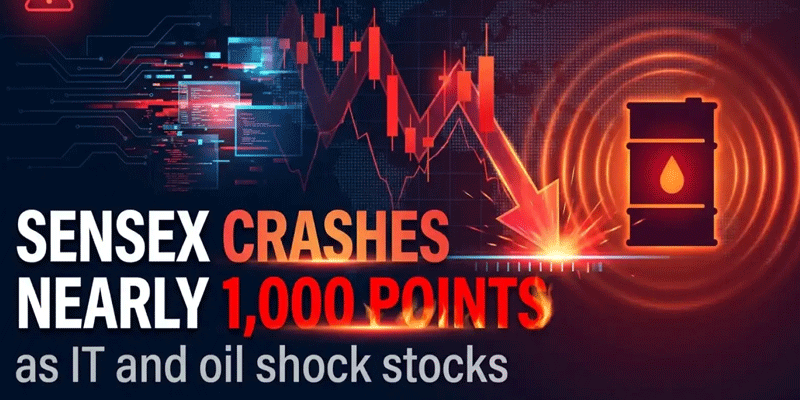
The wholesale picture is even more concerning. WPI inflation climbed from 9.78% in July to 9.92% in August, remaining above 9% for the fourth consecutive month. Fuel and power prices surged 22.93%, while mineral-oil inflation reached 38.48% and crude petroleum and natural gas inflation stood at 34.41%.
Wholesale food inflation also increased to 7.05%, while manufactured-product inflation rose to 8.37%. These figures point to substantial cost pressures for producers, raising the possibility that elevated input prices could gradually pass through to consumers.
RBI Faces a Difficult Policy Balancing Act
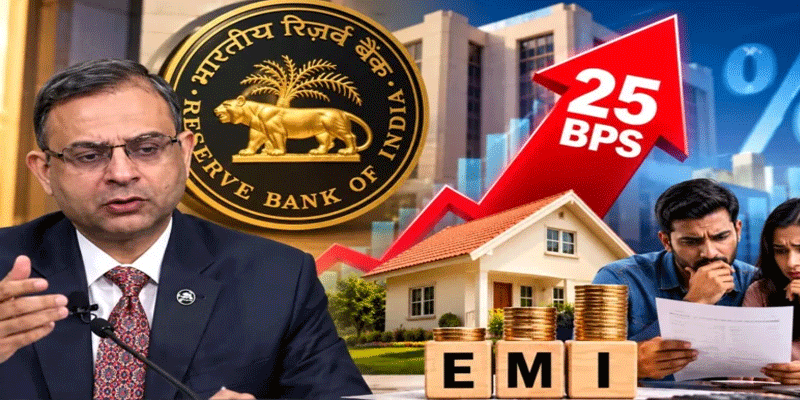
The August data complicates the RBI’s policy choices. The central bank has maintained the repo rate at 5.25%, while its inflation outlook has already incorporated significant risks from energy prices and global uncertainty.
A prolonged rise in inflation could strengthen arguments for tighter monetary conditions, although policymakers must also consider growth, investment and employment. Much will depend on crude-oil prices, weather conditions, food supplies and global geopolitical developments.
Price Stability Now Requires Wider Action
India’s August inflation numbers show that the challenge is no longer confined to food prices alone. Retail inflation is approaching the upper half of the RBI’s tolerance band, while wholesale inflation is nearing double digits.
The immediate priority must therefore be a coordinated response combining monetary vigilance with measures to strengthen food supplies, manage energy risks and contain supply-chain disruptions. If these pressures persist, protecting purchasing power while sustaining economic momentum will become an increasingly difficult policy test.
(With agency inputs)