
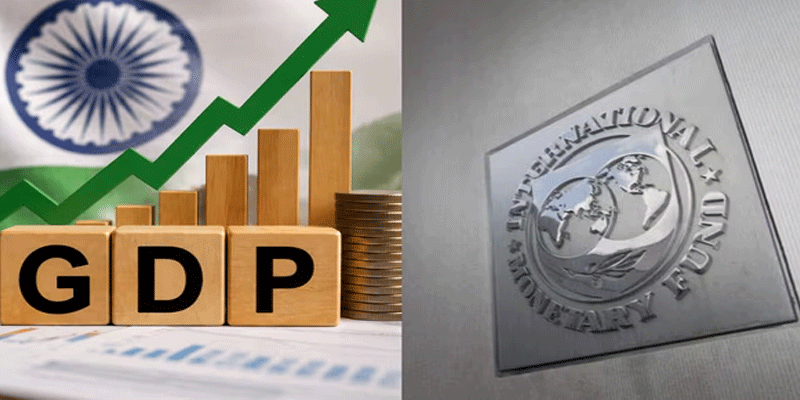
The IMF’s endorsement of India’s statistical reforms comes alongside a stronger-than-expected 7.8% real GDP growth in the April-June quarter of FY2026-27. The performance, driven particularly by services and exports, has reinforced India’s position as a major engine of global growth despite an adverse global energy environment.
A Strong Opening Quarter for FY27
India’s economy expanded 7.8% in the first quarter, comfortably exceeding the RBI’s 7% projection and the 7.1% median forecast in a Reuters poll. Although slower than the revised 8.6% recorded in the preceding quarter, the latest numbers indicate that economic momentum remains broad-based. Real GDP reached ₹81.36 lakh crore, while real GVA expanded 8.2%. Services remained particularly strong, with tertiary-sector GVA rising 10%, while manufacturing grew 9.2%.
Investment and consumption also provided support. Gross fixed capital formation increased 11.9%, private consumption rose 7.1% and exports grew 12%. The combination suggests that growth is increasingly being supported by domestic investment and private-sector activity alongside India’s established services strength.
GDP Growth Sparks Political Counterattack
The headline growth figure has nevertheless triggered a political dispute. Congress questioned whether the numbers accurately reflect conditions on the ground, pointing to employment, consumption and other economic pressures, and described the data as a “Greatly Distorted Picture.”
The government has strongly rejected the criticism. Commerce Minister Piyush Goyal argued that critics were comparing different GDP series and defended the 7.8% figure as a genuine reflection of India’s economic performance.
Why the IMF’s Statistical Endorsement Matters
The IMF’s response is significant because India’s GDP methodology has faced scrutiny over measurement, deflators and transparency. The revised national accounts framework, with 2022-23 as the base year, incorporates newer statistical inputs, including updated Index of Industrial Production and Producer Price Index series.
IMF Communications Director Julie Kozack said these additions should improve GDP estimates, while encouraging India to continue strengthening its statistical framework and data quality. The endorsement does not amount to an unconditional certification; rather, it recognises meaningful improvements while stressing the importance of continued transparency and refinement.
IMF Confidence Meets Global Energy Risks
The IMF continues to view India as one of the world’s fastest-growing economies and a key contributor to global expansion. Its July outlook projected 6.4% growth for FY2026-27 and 6.7% in 2027, while noting India’s resilience and a more balanced risk outlook.
That confidence is particularly relevant as elevated oil and gas prices threaten energy-importing economies. The IMF says India has so far demonstrated considerable resilience despite the shock. Yet prolonged energy inflation could pressure household purchasing power, inflation, the current account and the rupee.
Credibility Must Now Match Growth
India’s 7.8% growth is an encouraging signal, but its lasting significance will depend on more than the headline number. Strong investment, services, manufacturing and exports provide a solid foundation, while statistical reforms can strengthen international confidence in how that performance is measured.
The next test is therefore clear: sustaining high growth while making the data behind it increasingly transparent, consistent and credible.
(With Agency inputs)