The Rising Trend of Tech Layoffs
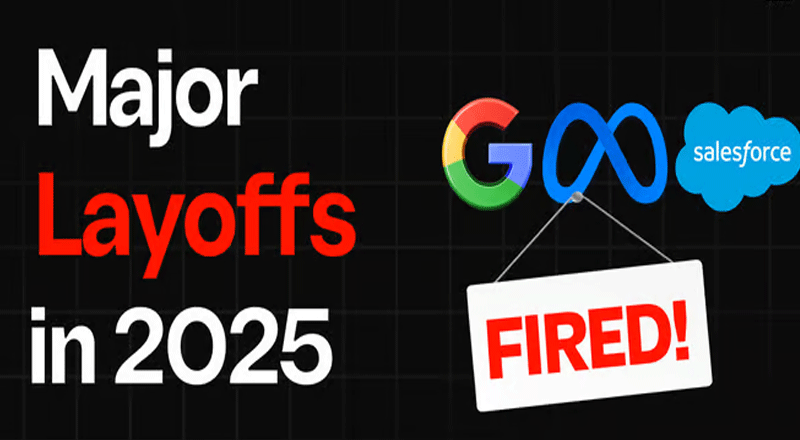
The global tech industry is witnessing a troubling surge in job cuts, with 22,692 employees laid off by 81 companies in 2025 alone. Major corporations such as HP, Meta, and Autodesk are at the forefront, citing reasons such as cost-cutting, restructuring, and the growing integration of artificial intelligence (AI). The trend, however, extends beyond technology, affecting industries like entertainment and automobiles, creating widespread economic uncertainty. While these numbers are lower than the staggering 152,472 layoffs recorded in 2024, experts suggest that the increasing reliance on AI is triggering a deep structural transformation in employment dynamics. The rapid acceleration of automation, coupled with post-pandemic recalibrations, has raised concerns about job security across multiple sectors.
Major Companies Announcing Layoffs
Several industry giants have announced large-scale job cuts as part of their restructuring strategies. Among them are:
- HP & Hewlett Packard Enterprise – Downsizing workforce to optimize costs and improve profitability.
- Meta – Focused on AI-driven transformation, leading to workforce adjustments.
- Autodesk & Workday – Prioritizing automation and efficiency through AI integration.
- Ola Electric & Infosys – Strategic layoffs to align workforce with technological advancements.
- Salesforce – Workforce realignment to maintain competitive edge in the evolving digital landscape.
- Cost-Cutting & Strategic Restructuring: Companies are optimizing resources by streamlining their workforce and redirecting investment into high-yield areas.
- AI Integration & Automation: The rise of AI is replacing traditional roles, especially in administrative, marketing, and software-related jobs.
- Post-Pandemic Workforce Recalibration: Companies that over hired during the pandemic are now adjusting workforce numbers to better reflect actual business needs.
- Economic Uncertainty: Fluctuations in global markets, inflation, and evolving consumer demands have forced organizations to rethink their operational strategies.
- Sector-Specific Disruptions: Industries such as entertainment and automobile are experiencing a shift towards digital and AI-driven business models, reducing the need for certain roles.
- Entertainment Industry: Companies are leveraging AI for content creation, reducing the need for human editors, scriptwriters, and animators.
- Automobile Sector: The shift to electric vehicles and autonomous technology has led to a decline in traditional manufacturing jobs.
- Finance & Retail: AI-powered automation is replacing roles in customer service, financial analysis, and supply chain management.
- Mark Thompson, Labor Economist: "Companies are recalibrating post-pandemic hiring excesses while gearing up for an AI-centric future. This paradox of layoffs and AI job creation is reshaping the workforce."
- Sarah Patel, Business Strategist: "AI is replacing traditional roles, but it's also creating new opportunities in AI development and cybersecurity. The challenge is workforce retraining."
- David Wong, Technology Analyst: "The next decade will see AI integration deepen across industries. Employees need to adapt and reskill to remain relevant."