
A Crucial Meeting Amid Shifting Global Power Dynamics
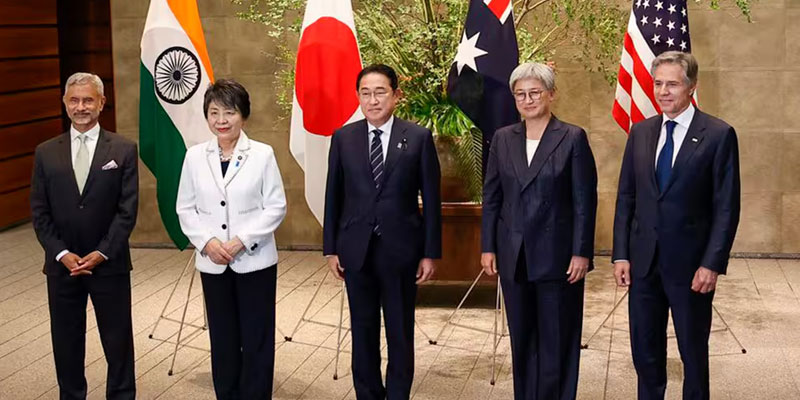
Prime Minister Narendra Modi will join US President Donald Trump, Australian Prime Minister Anthony Albanese and Japanese Prime Minister Sanae Takaichi for a crucial Quad Summit in Manila on November 17. Held on the sidelines of the ASEAN and East Asia summits, the meeting marks the grouping’s first leaders-level summit in nearly two years and Trump’s first participation since returning to the White House. Against the backdrop of China's expanding regional influence and shifting geopolitical equations, the summit will test the four nations' commitment to a stable, secure and rules-based Indo-Pacific.
Practical Cooperation Takes Centre Stage
Unlike previous high-profile diplomatic engagements, the Manila summit is expected to prioritise practical cooperation over aggressive geopolitical messaging against China. Key discussions will focus on:
· Maritime security: Strengthening surveillance, freedom of navigation and protection of critical sea lanes.
· Critical minerals: Diversifying access to essential resources and reducing excessive dependence on individual suppliers.
· Supply-chain resilience: Building reliable commercial networks and reducing strategic vulnerabilities.
· Energy security: Enhancing cooperation in securing sustainable and dependable energy supplies.
· Economic resilience: Promoting technology partnerships, infrastructure development and regional connectivity.
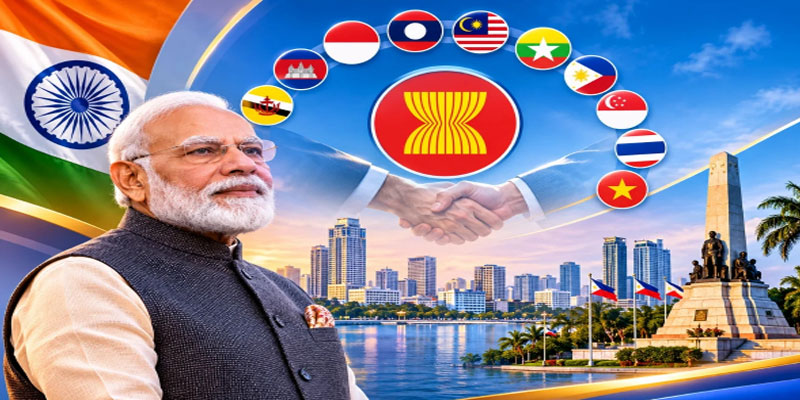
Manila carries historical significance, as the Quad was first established in 2007 and revived in 2017 in the Philippine capital. Hosting the meeting alongside ASEAN also reinforces the grouping's commitment to regional cooperation and ASEAN centrality.
India's Strategic Priorities and Diplomatic Balancing
For India, the summit offers an opportunity to strengthen coordination with Japan, Australia and the US on maritime domain awareness, critical technologies, infrastructure and secure trade routes. However, New Delhi will seek to preserve its strategic autonomy rather than endorse an explicitly confrontational approach towards Beijing.
The absence of a confirmed Modi-Trump bilateral meeting is noteworthy. Differences over tariffs, trade, Russian energy purchases and regional security concerns remain important considerations. Consequently, the Quad provides a relatively convenient diplomatic platform for maintaining engagement without requiring an immediate resolution of bilateral differences.
Trump's China Engagement Complicates the Equation
Trump's participation assumes particular significance because his Manila visit is expected to be followed by engagements in Shenzhen, including a meeting with Chinese President Xi Jinping and a proposed trilateral interaction involving Russian President Vladimir Putin.
The Real Test: Unity Beyond Diplomatic Statements
The Quad is an informal strategic partnership without a permanent secretariat or binding collective-defence obligations. Its effectiveness therefore depends on political coordination and tangible initiatives rather than military commitments.
A successful Manila summit must translate shared concerns into sustained cooperation. For India, the priority is ensuring that the Quad remains credible, cohesive and effective while safeguarding strategic flexibility. Ultimately, its success will be measured not by declarations against China, but by the four democracies' ability to deliver practical outcomes that strengthen Indo-Pacific security and stability.
(With agency inputs)