
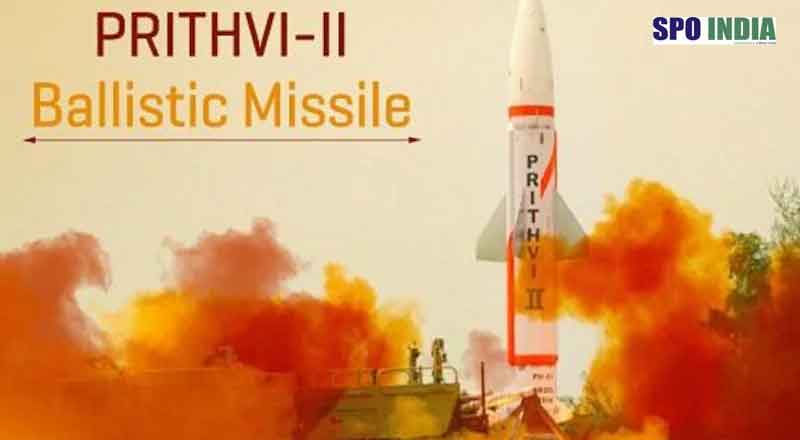
On Wednesday, India successfully conducted a flight test of its Phase-II ballistic missile defence system, showcasing its advanced capability to defend against hostile missiles with a range of up to 5,000 km. This significant achievement was accomplished at the Integrated Test Range (ITR) in Chandipur, Odisha. The test fully met all trial objectives, thereby validating a comprehensive network-centric warfare weapon system.
Ministerial Praise
Defence Minister Rajnath Singh praised the Defence Research and Development Organisation (DRDO) for this remarkable achievement, underscoring India's robust ballistic missile defence capabilities. "The DRDO successfully flight-tested Phase-II Ballistic Missile Defence System on July 24," the ministry confirmed.
Test Details
Target Launch: The target missile, mimicking an adversary ballistic missile, was launched at 16:20 hours. The missile was promptly detected by weapon system radars deployed on both land and sea, which subsequently activated the interceptor system.
Interceptor Launch: At 16:24 hours, the Phase-II AD endo-atmospheric missile was launched from LC-III at ITR, Chandipur.
Missile Specifications
The Phase-II AD endo-atmospheric missile is an indigenously developed, two-stage, solid-propelled, ground-launched system. It is designed to neutralize various enemy ballistic missile threats within the endo to low exo-atmospheric regions (below 100 km altitude). The endo-atmospheric missiles operate within the earth’s atmosphere, while exo-atmospheric missiles function in the uppermost regions of the earth's atmosphere.
System Capabilities
The flight test showcased a sophisticated network-centric warfare weapon system that includes:
- Long-range sensors for early detection and tracking
- Low latency communication systems for rapid data transmission
- Advanced interceptor missiles capable of engaging and destroying incoming threats
- Electro-optical systems
- Radar installations
- Telemetry stations deployed at various locations, including on-board a monitoring ship