
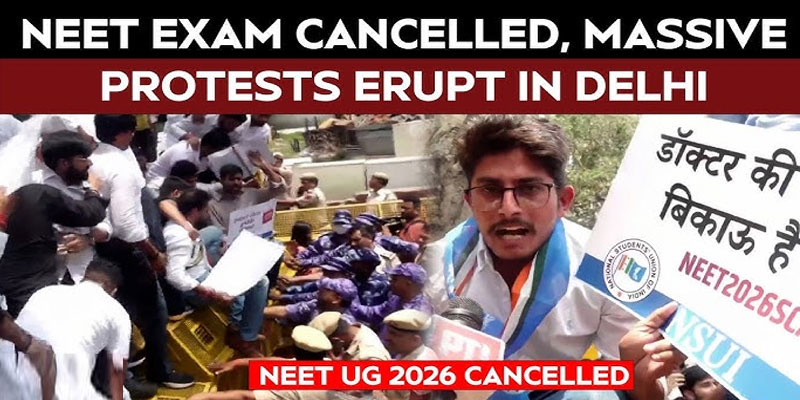
The National Testing Agency (NTA) has cancelled NEET-UG 2026, conducted on May 3, after confirming a major paper leak that allegedly compromised the integrity of India’s biggest medical entrance examination. The decision impacts nearly 22 lakh candidates, including over 22,05,000 students who appeared for the exam this year—the highest participation ever recorded in NEET history.
The cancellation comes after investigators uncovered evidence that a so-called “guess paper” circulated in Rajasthan contained more than 100 questions matching the actual examination paper. The case has now escalated into a nationwide controversy, with the Central Bureau of Investigation (CBI) expected to probe what authorities believe was a highly organized examination leak network operating across multiple states.
How the Leak Triggered a National Examination Crisis
The controversy reportedly began in Sikar, Rajasthan, a major coaching hub for medical aspirants. According to investigations by the Rajasthan Special Operations Group (SOG), students staying in hostels allegedly received a 400-question question bank on the evening of May 2, just hours before the examination.
Investigators later found that nearly 125 to 140 questions from the leaked material matched the actual NEET-UG 2026 paper. The leaked content was allegedly circulated through encrypted messaging applications and social media channels by accused individuals identified as Babulal Katara and Anil Meena. Reports suggest the paper was sold for nearly ₹5 lakh per candidate.
Several students reportedly filed complaints at the Udyog Nagar Police Station on the day of the examination itself. However, when local authorities allegedly failed to act immediately, candidates escalated the matter directly to the NTA through emails and formal complaints.
The NTA received preliminary inputs on May 7 and escalated the matter to central agencies the following day. After cross-verifying evidence, the agency concluded that the sanctity of the examination had been irreparably compromised, forcing the unprecedented cancellation.
NTA Announces “Zero Burden” Relief for Students
Recognizing the emotional and financial stress faced by lakhs of aspirants, the NTA has introduced a “zero burden” policy for the re-examination.
Students will not be required to register again, and their existing application details will automatically remain valid. No additional examination fee will be charged, while previously selected exam centres will continue to remain applicable. Fresh admit cards will be issued before the revised examination date.
The move aims to minimize further anxiety among students already affected by uncertainty and intense competition.
A Blow to Institutional Credibility
The cancellation has raised serious concerns about the credibility of India’s examination system. The NTA had earlier claimed that the exam was conducted under strict security protocols involving biometric verification, AI-monitored CCTV surveillance, GPS tracking of question papers, and deployment of signal jammers.
However, the leak exposed a critical weakness: while physical security arrangements were extensive, digital communication channels remained vulnerable. The scandal has reignited debates over coaching mafias, organized cheating syndicates, and the commercialization of competitive examinations.
The stakes are exceptionally high. NEET-UG determines admissions to more than 1,10,000 MBBS seats across India, making it one of the country’s most consequential examinations.
Recurring Controversies Deepen Public Distrust
This is not the first controversy involving NEET. The examination system faced intense scrutiny in 2024 over allegations of paper leaks and disputed grace marks awarded to over 1,500 candidates. The latest scandal has amplified public concerns regarding transparency, accountability, and institutional preparedness.
At the same time, the NTA’s decision to cancel the examination despite enormous logistical and administrative costs signals an acknowledgment that public trust in the examination process cannot be compromised.
A Critical Turning Point for India’s Examination System
The cancellation of NEET-UG 2026 marks more than an administrative setback—it represents a critical moment for India’s entire competitive examination framework. For millions of students, the issue is not merely about a re-test but about fairness, transparency, and equal opportunity. The coming months will test whether authorities can rebuild confidence through stronger safeguards, faster investigations, and institutional reforms. Ultimately, the credibility of India’s education system depends not only on conducting examinations efficiently, but on ensuring that merit remains genuinely protected.
(With agency inputs)